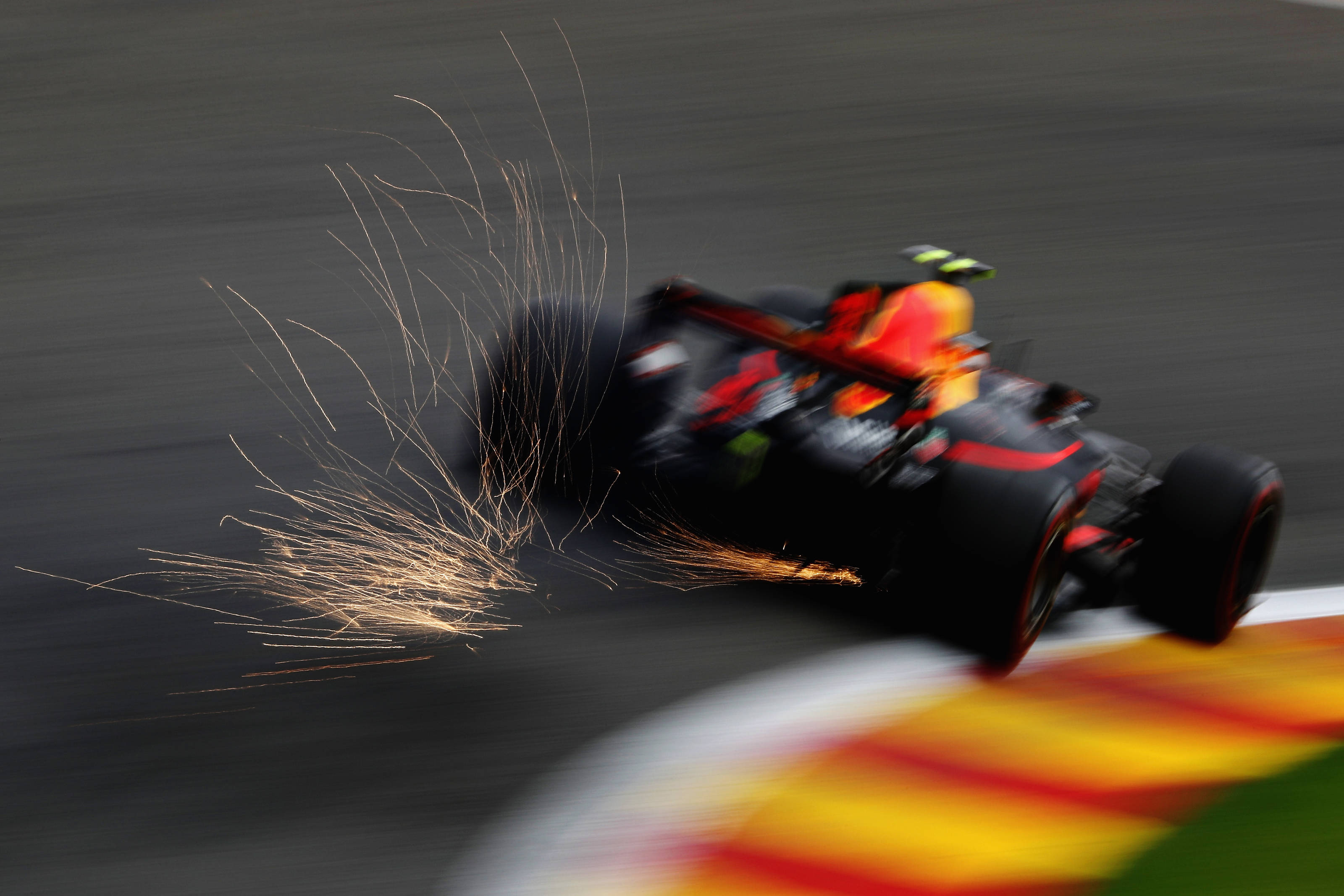
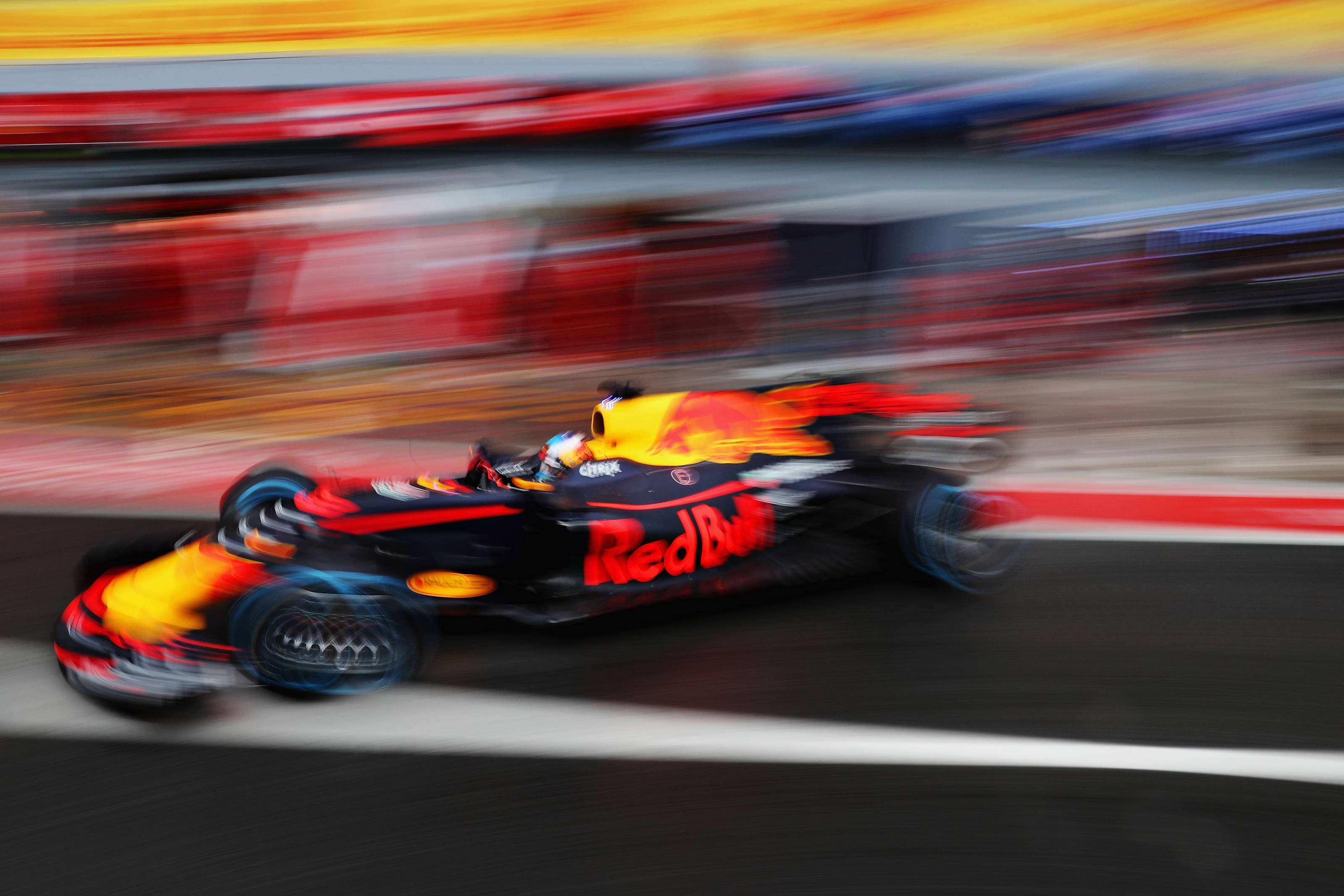
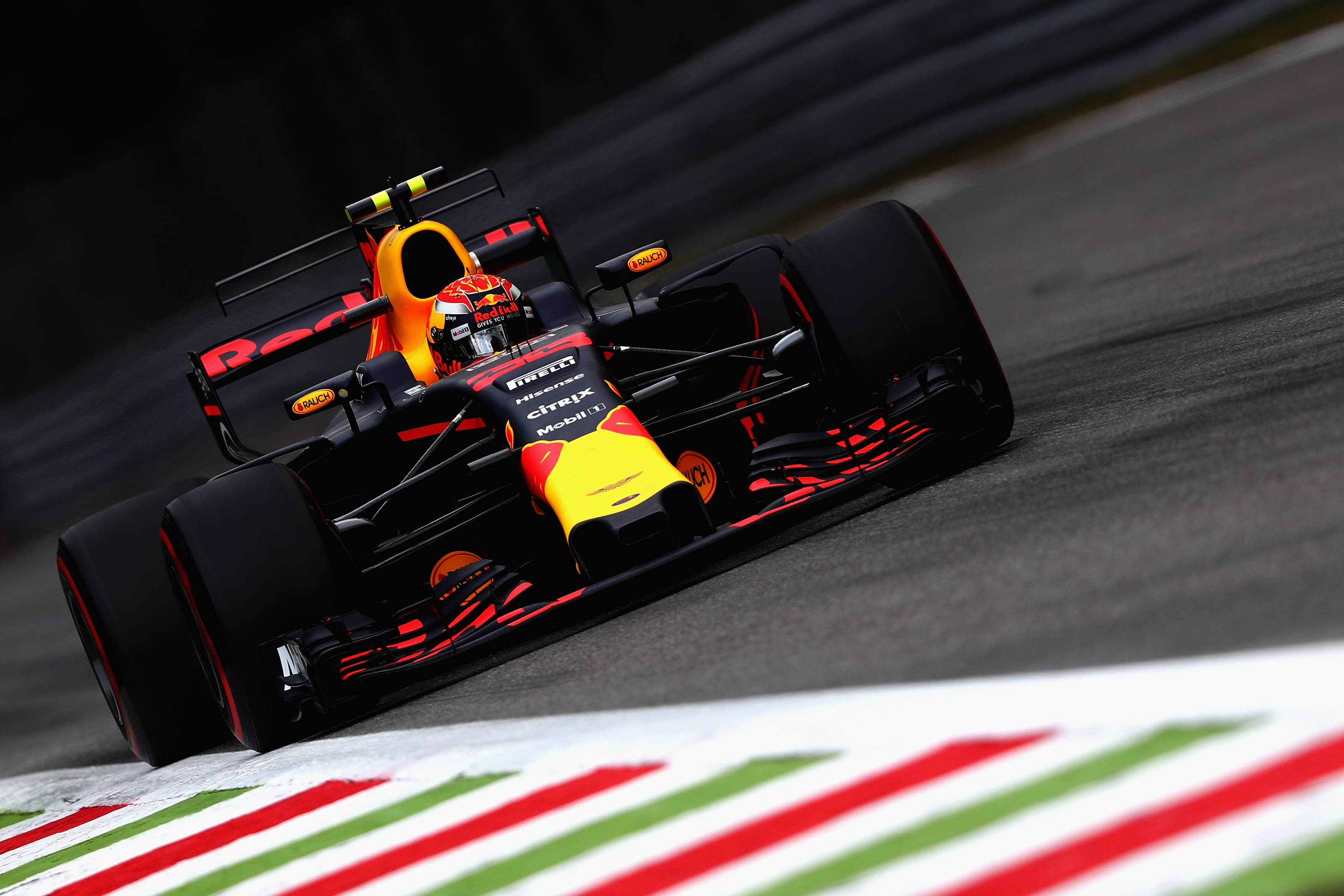
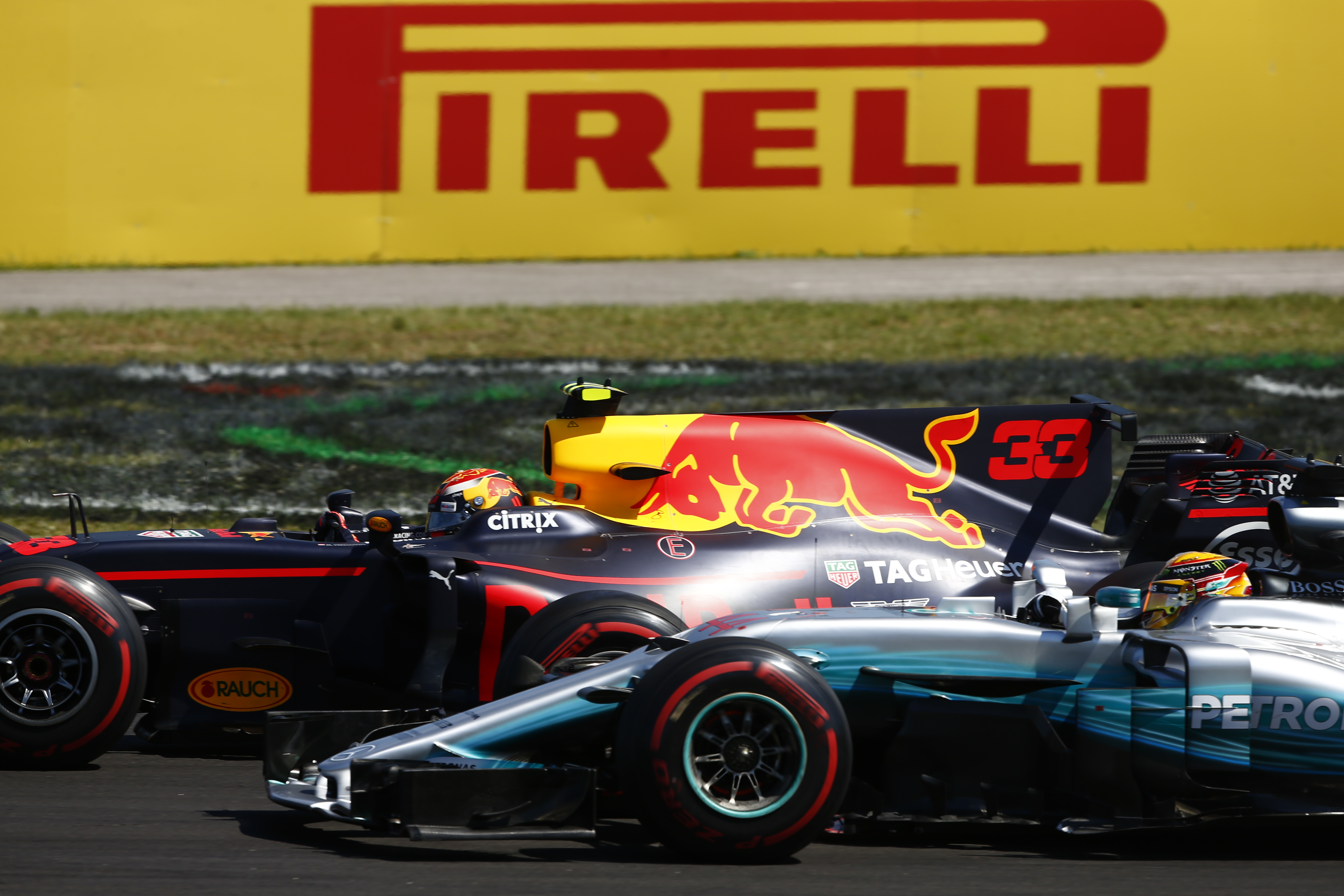
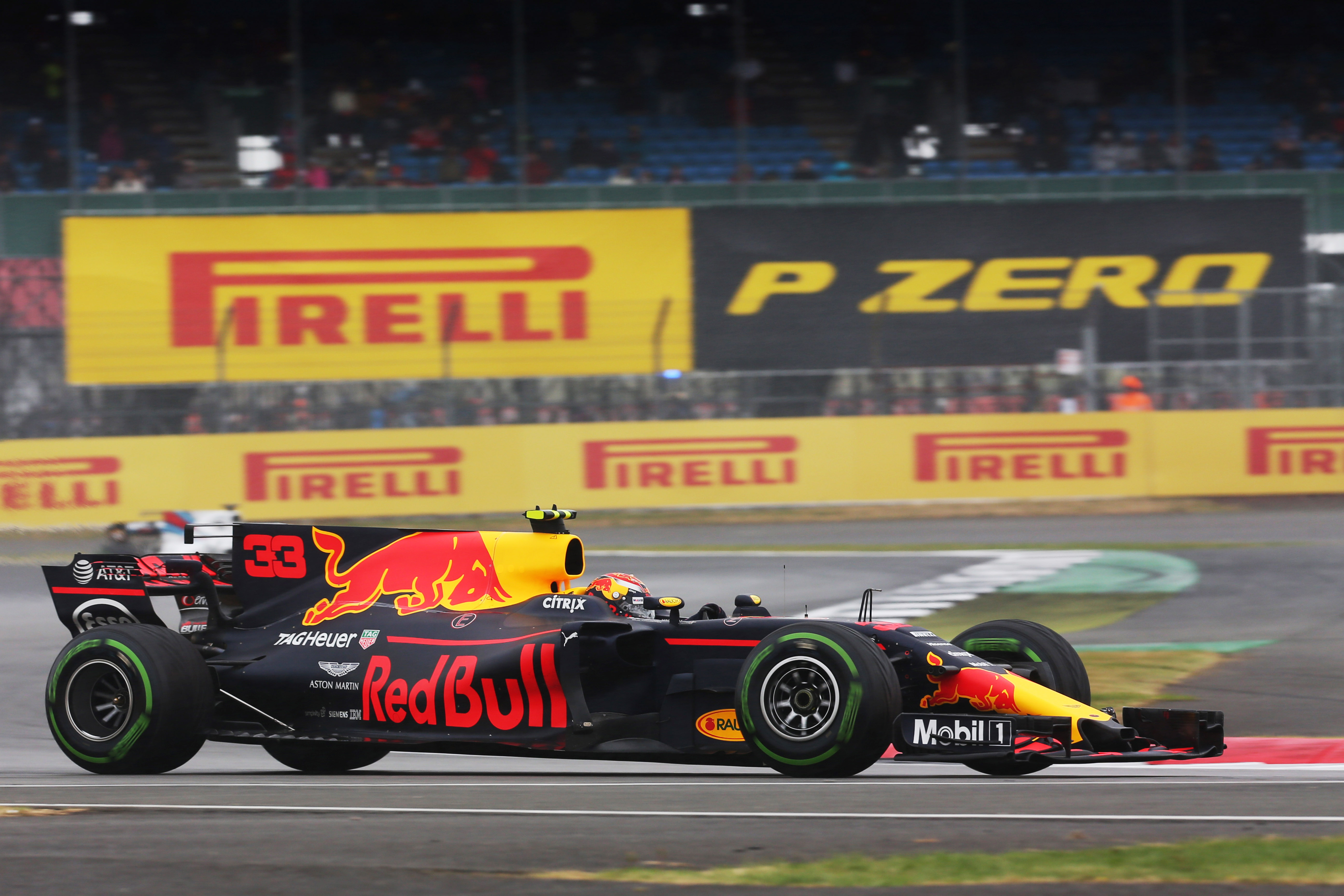
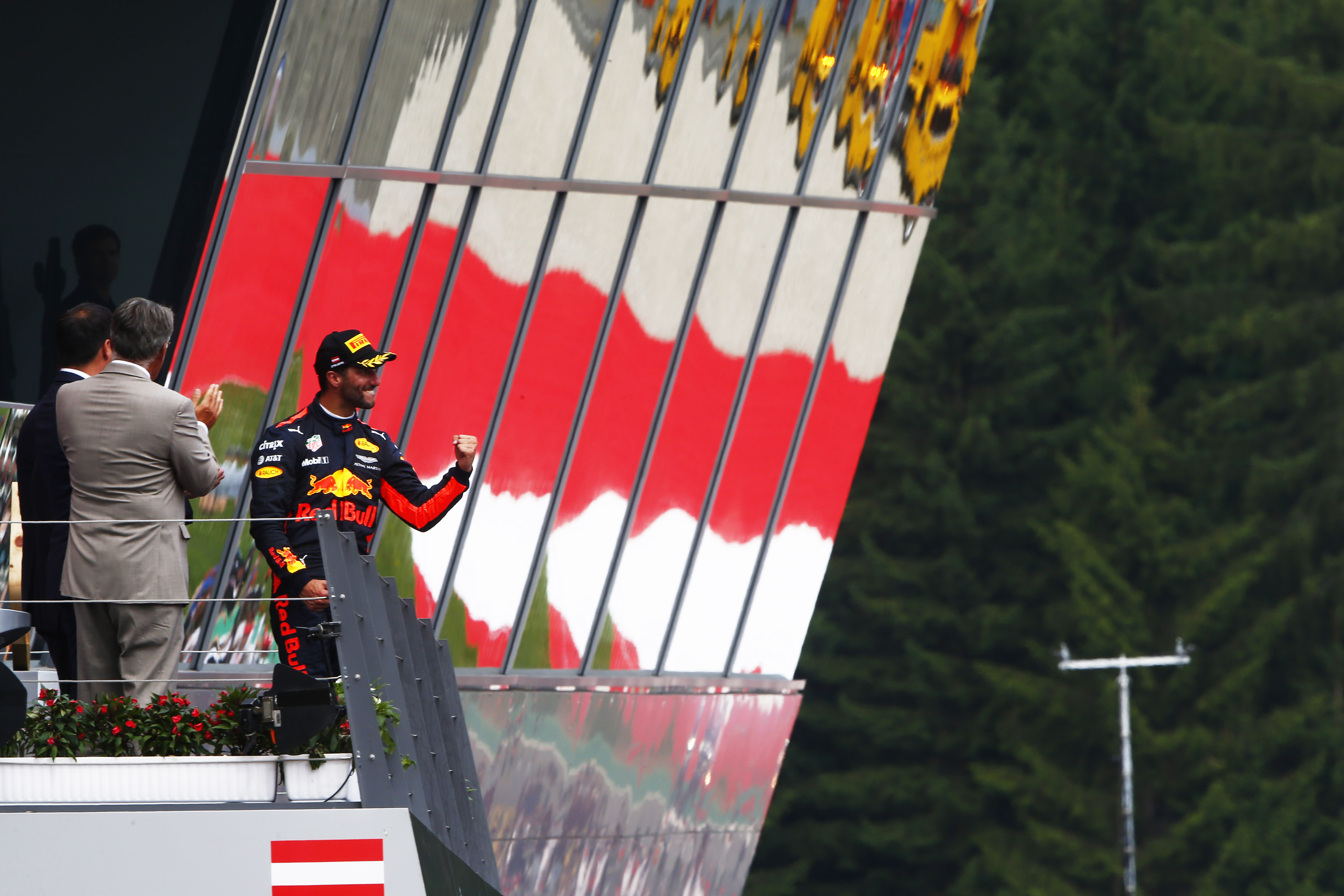
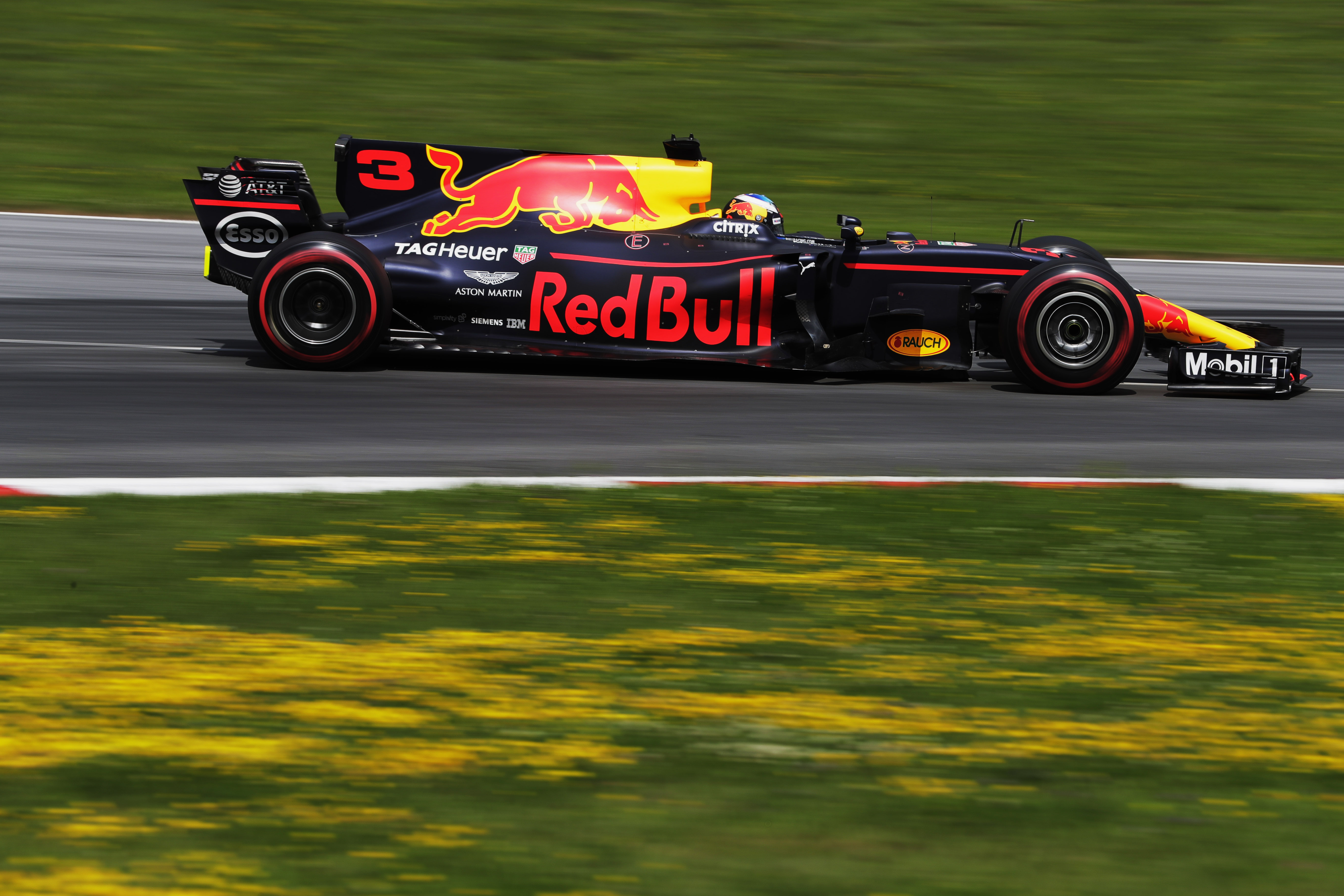
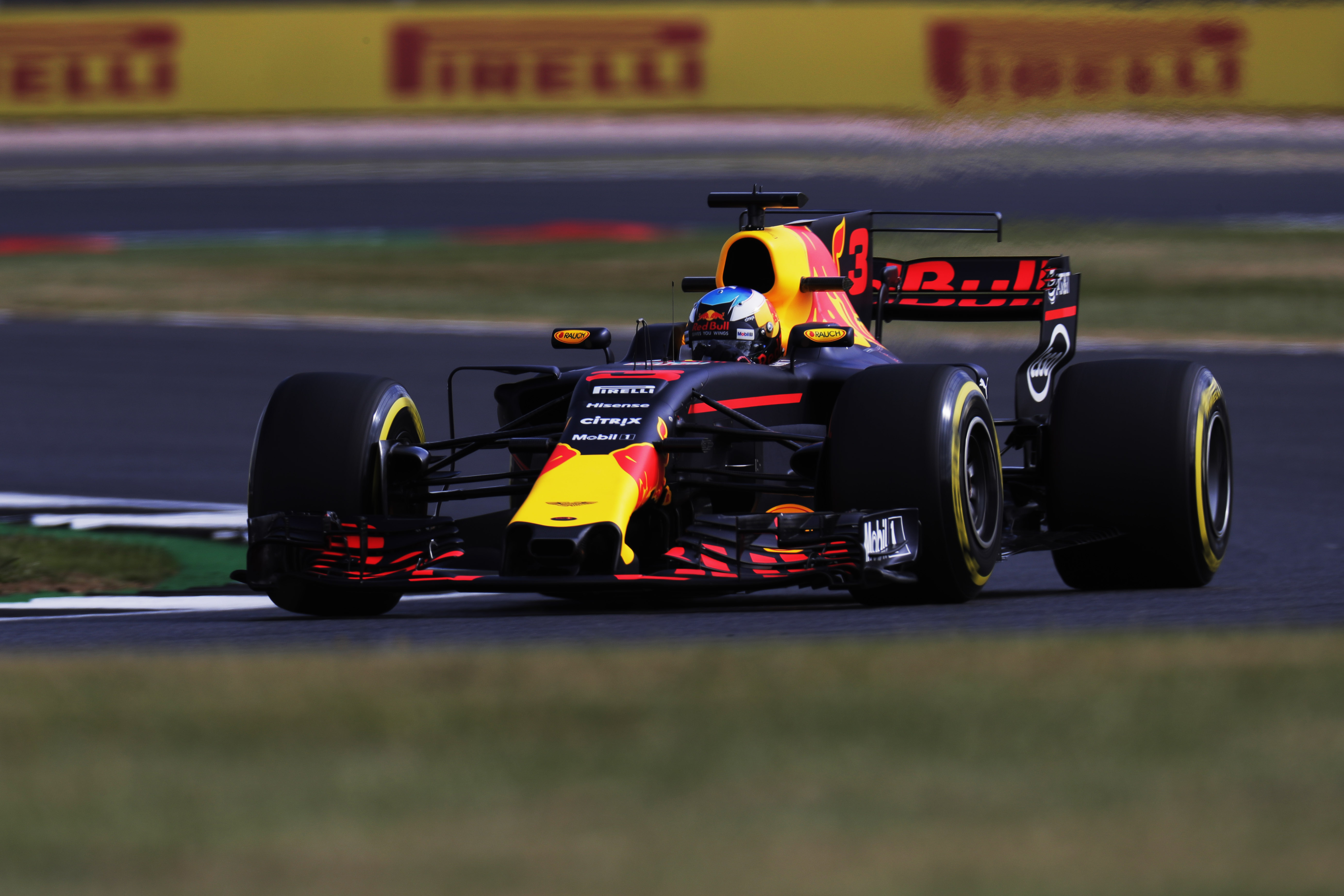
Red Bull Racing could be looking at the final years of its Formula One tenure, following reports that Renault has signalled its intent to cease its supply of engines to the Austrian team after the 2018 season.
Getty Images / Red Bull Content Pool
Renault’s relationship with the Red Bull company has been fraught for some time now. The two parties came close to ending their association in 2015, before an absence of alternative suppliers forced Red Bull to recommit to its Renault contract for the time being.
And although an engine rebadging by TAG-Heuer seemed to improve relations last year, this season has seen a return of Red Bull’s public criticism of Renault, as a combined lack of horsepower and reliability has seen the former champions slump to a distant third-fastest team.
Now, if the current reports are true, it appears that the Red Bull-Renault alliance has at last reached its conclusive breaking point.
That the news comes at the same time as Renault has finally confirmed its new supply agreement with McLaren is no surprise—with Red Bull believed to be using Toro Rosso’s Honda deal to evaluate a future switch to Japanese power, it seems Renault is electing to jump before it is pushed. Having both a factory team on the rise and a grateful customer in McLaren, there is no longer any incentive for Renault to extend its fractious Red Bull relationship beyond its final term next year.
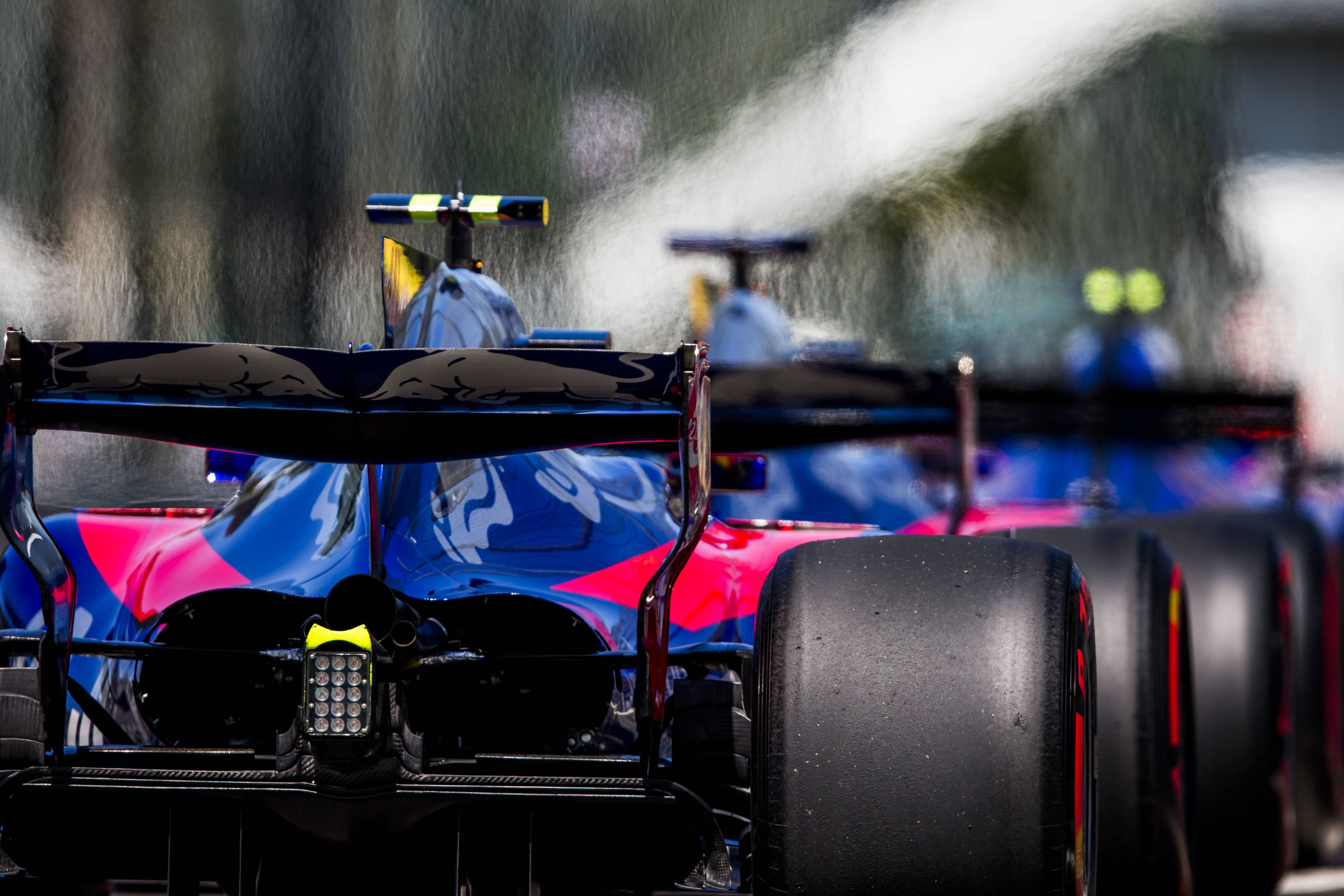
Such a break-up would leave Red Bull with little choice but to become Honda’s de facto works team in 2019. And with the way the next few seasons of F1 are already shaping up, that deal could well prove the first step in Red Bull Racing’s exit from the sport.
Getty Images / Red Bull Content Pool
For starters, a premature Honda alliance would go down like a lead balloon in Red Bull’s driver stable.
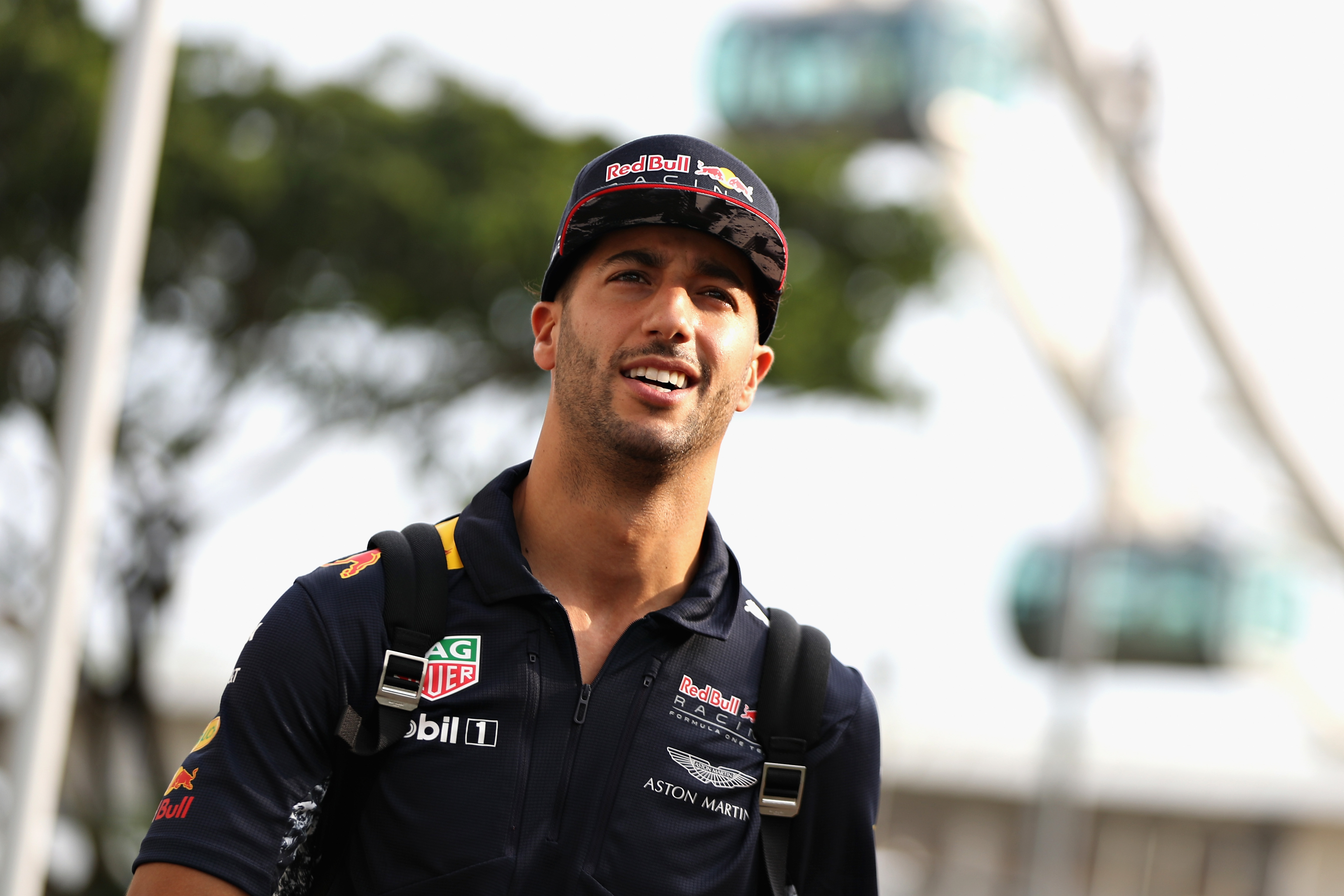
Daniel Ricciardo has already stated that Red Bull will need to be capable of a genuine title challenge within the next few years if they are to convince him into extending his stay at the team beyond 2018. But unless Honda can make a phenomenal leap forward over the next twelve months, it’s almost certain that Ricciardo will take his hunt for a maiden title to either Mercedes or Ferrari.
Nor can Max Verstappen be expected to hold faith in the Japanese marque, even if he has to wait a year longer than Ricciardo before leaving. And then there’s Carlos Sainz—set to be loaned out to the factory Renault team next year, he will surely do all he can to avoid being called back to Red Bull-Honda for 2019.
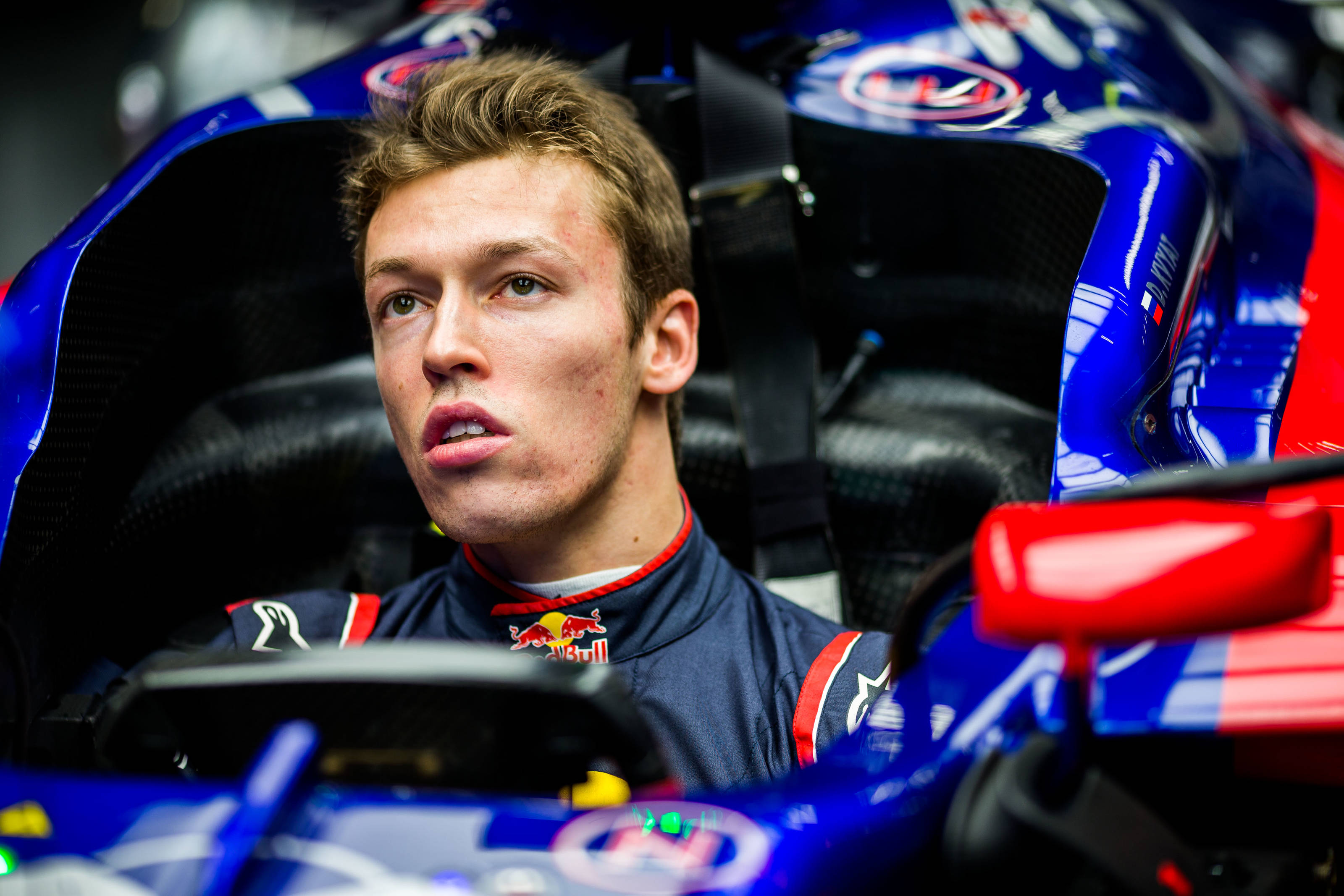
It’s entirely possible, then, that by 2020, Red Bull’s senior lineup could comprise Pierre Gasly and the returning Daniil Kvyat, whilst Toro Rosso’s seats are filled by Honda juniors like Nobuharu Matsushita and Nirei Fukuzumi—a far cry from the current pedigree enjoyed by the Red Bull fold.
Getty Images / Red Bull Content Pool
The other danger, of course, is that it’s not just Red Bull’s drivers who choose to jump ship. Adrian Newey is perhaps the team’s biggest asset outside of the cockpit, but for a man used to designing race- and championship-winning cars, there will be little for him to relish in overcompensating Honda’s horsepower deficit, especially as he has already expressed a desire to step back from leading Red Bull’s technical team in the near future.
It’s also well worth questioning just how willing Christian Horner will be to guide Red Bull through yet another uncompetitive era, or how enthusiastic Helmut Marko would be about managing a driver lineup that lacks the kind of flair and potential seen in recent years.
But as painful as any of those losses would be, the most damning exit would easily come from the man at the very head of Red Bull’s operations—Dietrich Mateschitz.
Although Mateschitz’ many quit threats have been decidedly impotent in the past, it will be much harder to dismiss them should he make similar statements in the next three years. Red Bull’s commitment to F1 is up for renegotiation in 2020—coinciding with both the reported duration of Toro Rosso’s new Honda deal, and the end of F1’s current engine formula—which will give Mateschitz plenty of time to fully evaluate Red Bull’s prospects from 2021 onwards, and whether they merit the sums required to run two F1 teams.
Getty Images / Red Bull Content Pool
Quite what would happen to the spoils of Mateschitz’ racing empire is hard to predict this far ahead of time. If Honda remains committed to F1 into the proposed new twin-turbo era, it may assume the Milton Keynes outfit into a full factory team, as it did with BAR in 2006. There have also been numerous suggestions that Porsche is in the frame for a 2021 buyout, or that Red Bull might remain as a title sponsor for a works Aston Martin-Cosworth alliance.
As for Toro Rosso, the Italian-based team and its chief designer James Key would surely make an alluring target for Ferrari’s Sergio Marchionne, assuming he can’t convince Sauber to become an Alfa Romeo-badged junior team.
But even if none of these exit strategies come to fruition by 2020, there is still nothing stopping Mateschitz—valued to be worth an estimated $15.4 billion—from simply closing the doors on Red Bull’s two teams and selling off the assets elsewhere.
And whilst before that may have sounded like an insincere threat from the Austrian, a painful enforced alliance with Honda and the end of the current Concorde Agreement will be more than enough to turn Red Bull’s exit into a serious consideration.
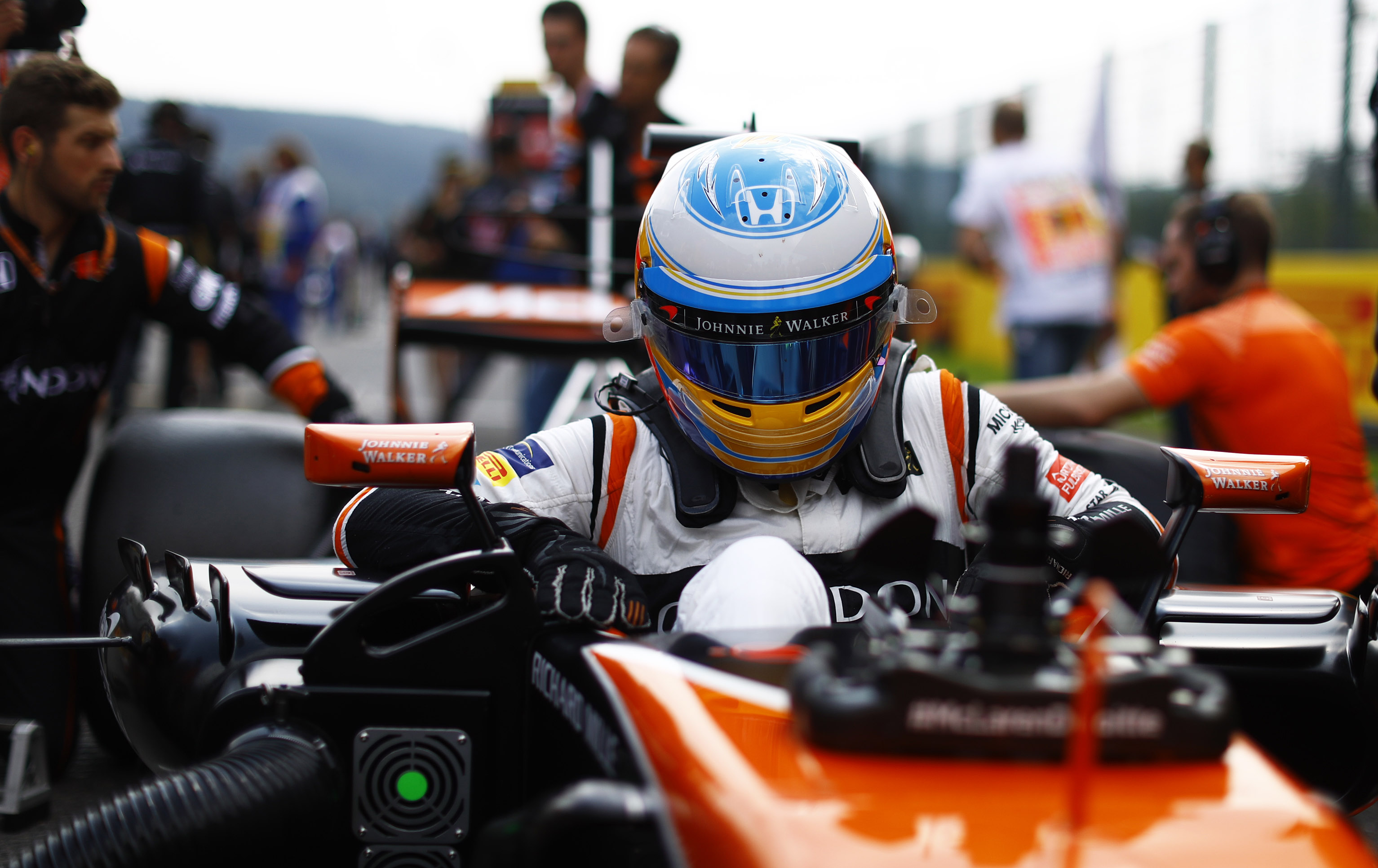
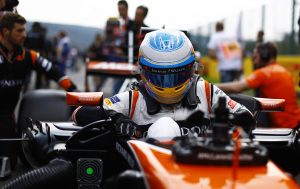
Two of the best drivers on the grid battled several times, each other for the title of the world champion. Fernando Alonso is a two time world champion currently racing for McLaren-Honda, before that he was a test driver for Benetton, joined Minardi in 2001, Renault was his next station from 2003 to 2006, then signed a contract with McLaren where he raced for only one season and returned back to Return in 2008. Fernando’s next step was Ferrari, from 2010 to 2014. In 2015, he returned to McLaren and he is racing there since now.
The Spaniard, while he was racing for Renault, finished first on the drivers’ championship for two consecutive years. Nando, won his first title in 2005 and the following season celebrated his second and final title.
Sebastian Vettel
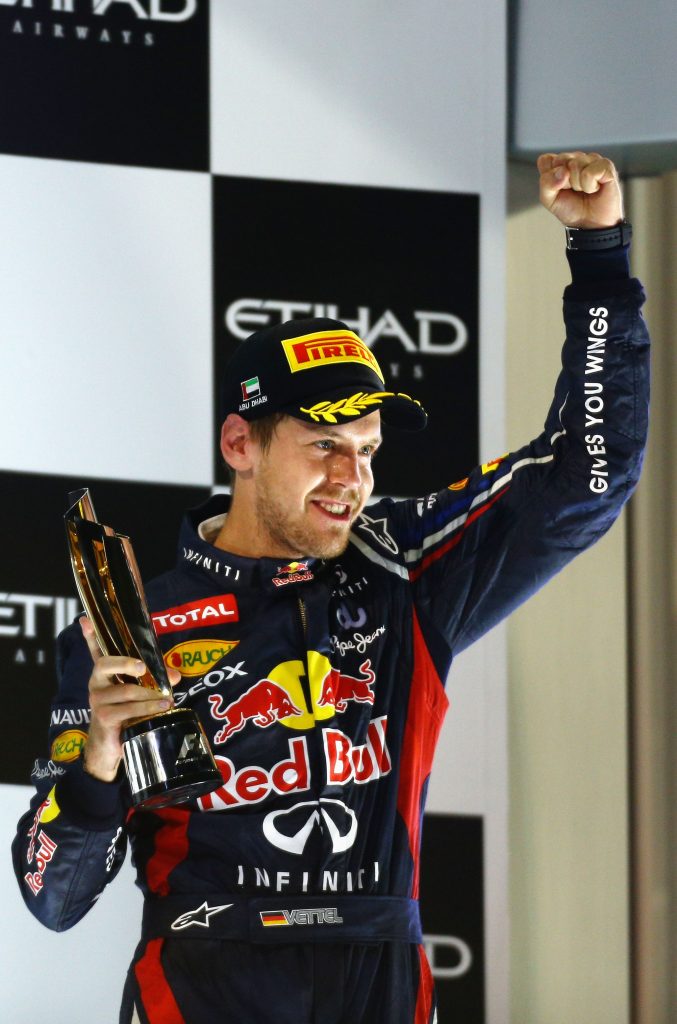
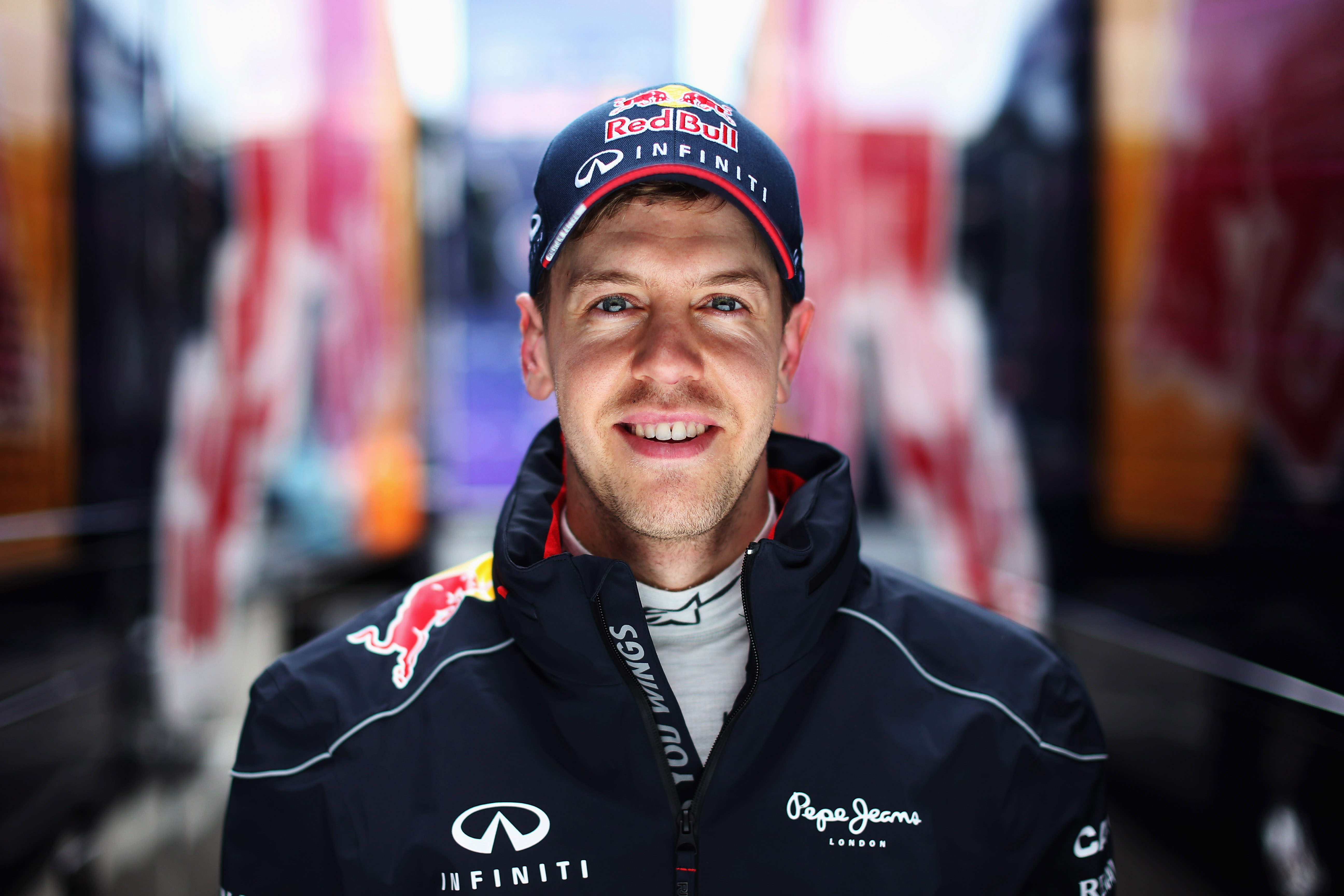
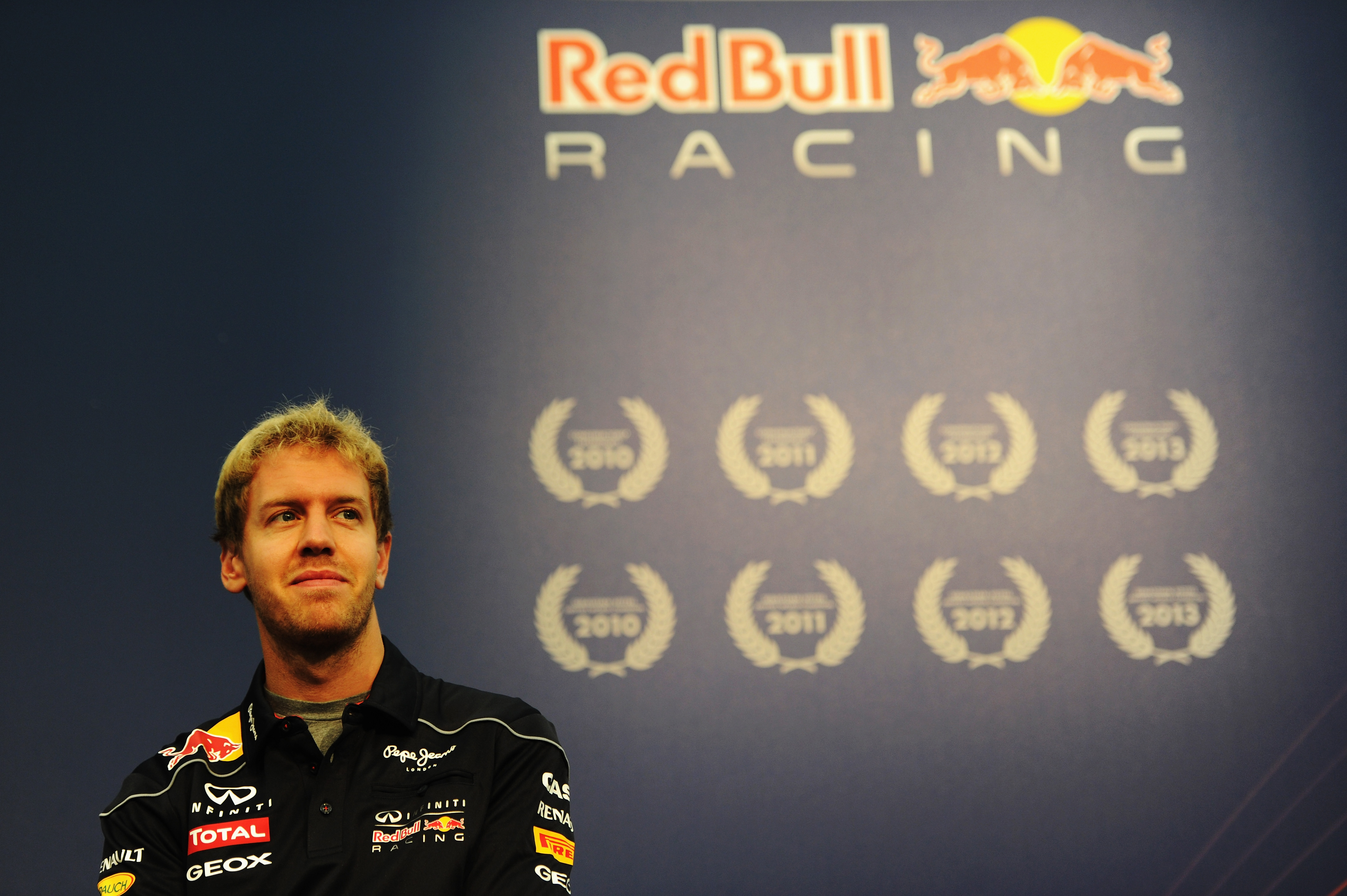
Vettel born in Heppenheim on July 3rd, 1987, at his early steps as a Formula One driver, Sebastian joined BMW Sauber as a test driver and made his official debut at the United States Grand Prix in 2007, then he signed a contract with Toro Rosso and remained there until 2008. The next stop in his career was Red Bull Racing, during his period with the Bulls he celebrated four championships (2010, 2011, 2012, 2013). In 2015, the German fulfilled his childhood dream, signed a contract with Scuderia Ferrari and he is still racing for Ferrari alongside Kimi Raikkonen.
David vs Goliath
Credit: Getty Images / Red Bull Content Pool
Fernando Alonso and Sebastian Vettel fought each other for the championship while they were racing for Ferrari and Red Bull respectively. Two times Fernando was very close to beat Vettel and win the championship with Ferrari, the first was in 2010 and the second was two years later in 2012. The Spaniard wished to become David and finish ahead of his opponent, but unfortunately Goliath was stronger, and Red Bull was unbeatable those years.
In 2010, Sebastian Vettel finished first in the drivers’ championship, the difference to his rival Alonso, was just four points. The German scored 256 points, whilst the Spaniard collected 252 points. In 19 races Vettel and Alonso were fighting wheel to wheel for the world title, during those races Sebastian retired three times and finished out of the points only in Belgian Grand Prix. Furthermore, Vettel won five races same number of victories with his opponent Fernando Alonso.
From the other hand, Fernando Alonso retired in Belgium, didn’t finish the Malaysian Grand Prix and finished out of the top ten at Silverstone. In the last six races of the 2010 season, Nando won three Grands Prix and finished twice third. Fernando played his final card for the championship in the last race of the season in Abu Dhabi.
Vitaly Petrov the Russian title decider
A thrilling race took place in Yas Marina, before the race, Fernando Alonso was leading the drivers’ championship with 246 points, followed by Mark Webber and Sebastian Vettel which collected 236 and 231 points respectively. Lewis Hamilton had also mathematical chances to win the title as he had 222 points and he was 24 points behind Fernando Alonso. The Spaniard, had to secure the first two places in order to win the title without having to consider the other results.
On Saturday’s qualifying, Sebastian Vettel secured the pole-position, Lewis Hamilton was the second quickest driver on the grid and Fernando Alonso took the third position followed by Jenson Button and Mark Webber. At the first lap of the race, Sebastian Vettel was leading the race, followed by Hamilton and Jenson Button. Alonso had a slow start which cost him the third place and dropped him down to fourth. After the first pit-stops, Alonso re-joined behind Petrov. Fernando was on hard tyres and Petrov had already done his pit-stop, Alonso couldn’t overtake Vitaly. Even when the Spaniard tried to attack the Russian, Petrov was always in position to defend his position.
Sebastian Vettel led the race all the way, Lewis Hamilton finished second, Jenson Button third, and Fernando Alonso, after 40 laps of battling with Petrov, finished seventh. That result was enough for Sebastian Vettel to secure his first world title in his Formula One career.
Two years later…
Credit: Pirelli
In 2012, the two drivers crossed their swords once again. Sebastian Vettel and Fernando Alonso fought closely, but at the end the Germans always win. Vettel scored 281 points in 20 races, whilst Alonso scored 278 points. The German, finished five times on the top step of the podium, retired in the European Grand Prix and finished out of the points in two races, the first was in Malaysia and the second in Italy.
Fernando Alonso, won three races during the season and finished ten times on the podium. The Spaniard, retired in Belgium and in Japan, but despite those two retirements he finished in the top-10 in the rest races.
In Italy, Sebastian Vettel retired on lap 47 due to failed alternator, after that race the German won four consecutive races, finished third in Abu Dhabi, second in the USA and sixth in the final race of the season in Brazil. In Brazil, Sebastian Vettel needed to defend his 13 point lead in order to secure his third championship. The fourth position, would be enough for Sebastian to give him the title, even if Alonso won the race.
Fernando Alonso, qualified eighth whilst Sebastian Vettel set the fourth quickest lap on the grid and placed behind Hamilton, Button and Webber. The rain altered everything during the race, the teams were confused about which strategy would be correct for their drivers. On lap 23, the safety car deployed, Sebastian Vettel and Fernando Alonso were fifth and fourth respectively. The damage on Vettel’s car didn’t allow him to set a quick dry laps, few laps later the rain forced all the drivers to pit for intermediates.
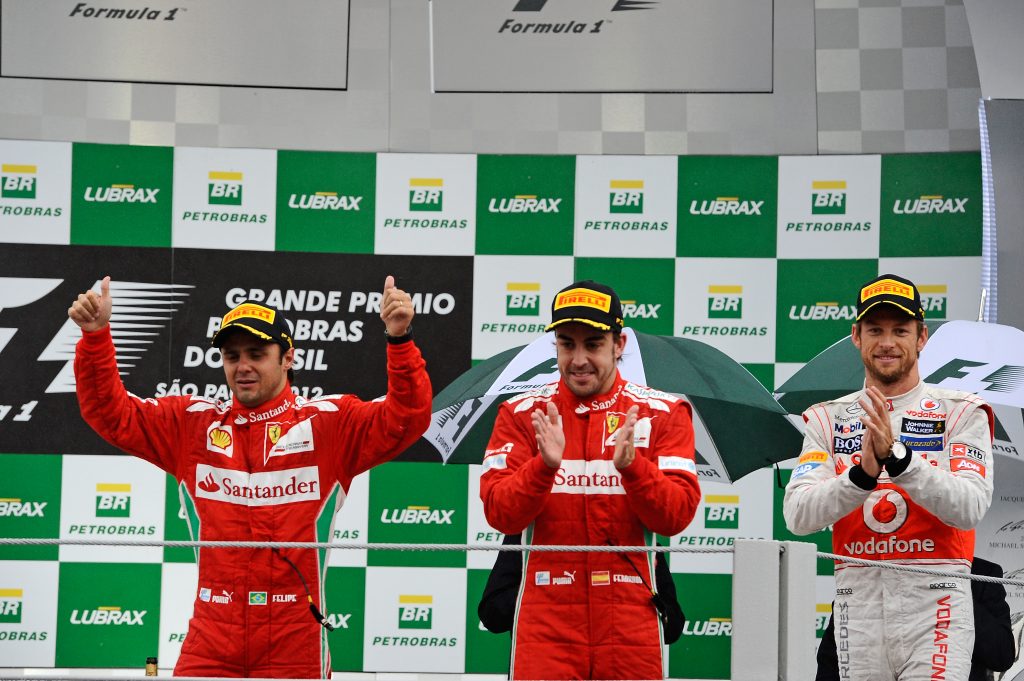
At the end of the race, Fernando Alonso finished second and Sebastian Vettel sixth, still Vettel collected enough points in order to celebrate his third world title.
Hopefully, one day we will see these top two drivers to fight, once again, each other for the title.
As we carry on with the Red Bull Racing 2017 review…..
Hungaroring, Budapest, Hungary. Saturday 29 July 2017. World Copyright: Andy Hone/LAT Images ref: Digital Image _ONY1841
Azerbaijan, Baku
The European Grand Prix was once more taken off the calendar for 2017, but it was still in Baku, placed at Azerbaijan Grand Prix. Tight and twisty amongst the streets of Baku for the first two thirds, and then that mammoth straight in the final sector of track. The setup on this track is one of the tougher ones in the calendar. Practice looked good for the Red Bull boys as Verstappen was fastest in both sessions on Friday, with Ricciardo also having reasonable pace throughout.
It looked like Mercedes and Ferrari once more turned the power down in practice as they found 2.2 seconds between 3rd practice and the final qualifying positions, Verstappen was best of the rest in 5th. Ricciardo once more crashed when it mattered in Q3, he started 10th. It was the most chaotic start of the season, with Sainz clipping his team mate Kvyat and various drivers stopping with debris. Ricciardo was one of them and on lap 6 he pitted, he returned to track 17th. Verstappen was up in the thick of it but once again it was his car, and oil pressure problem made him ground to halt on the long front straight on lap 12.
Ricciardo then used the safety car periods and the red flag to full effect, as he jumped both Williams drivers at the restart on lap 24, latter on through Vettel’s rage he was awarded a 10 second stop-go penalty for colliding with Hamilton, and Hamilton had to pit due to safety reasons his headrest came loose. This left Ricciardo to drive the closing laps on his own, Bottas was flying and managed to pip Stroll to the line for 2nd, but Ricciardo was just too far away.
Ricciardo with this amazing victory jumped Raikonnen to 4th in the driver’s standings, whilst Verstappen was once more left frustrated with another race of opportunity thrown away with retirement due to mechanical issues.
Driver Points: Verstappen 43 – Ricciardo 92
Austria, Speilberg
The Red Bull Ring is the ninth round of the 2017 calendar of the season, the fast cars they are pushing closer and closer to being near under a minute. Qualifying was as per previous with the two teams leading up front with Red Bull best of the rest, albeit Hamilton due to a gearbox change he has now got a penalty. Ricciardo qualified 5th and Verstappen 6th, as a result of the penalty they start 4th and 5th respectively.
Lights out and away they went Ricciardo had a solid start, but Verstappen got clipped in the rear spinning him around and Alonso collecting him as a result. Verstappen had to retire due to terminal damage, another weekend to forget the Dutchman. Ricciardo was currently 3rd, following Bottas and Vettel. Hamilton was chasing up the field from his low start, Ricciardo pitted and got out just in front of the bit, and he managed to held on for another podium. Only 6 seconds behind eventually race winner of Bottas so much better for Red Bull.
Driver Points: Verstappen 43 – Ricciardo 107
Spa Francorchamps, Belgium. Friday 25 August 2017. World Copyright: Steven Tee/LAT Images ref: Digital Image _R3I9622
Britain, Silverstone
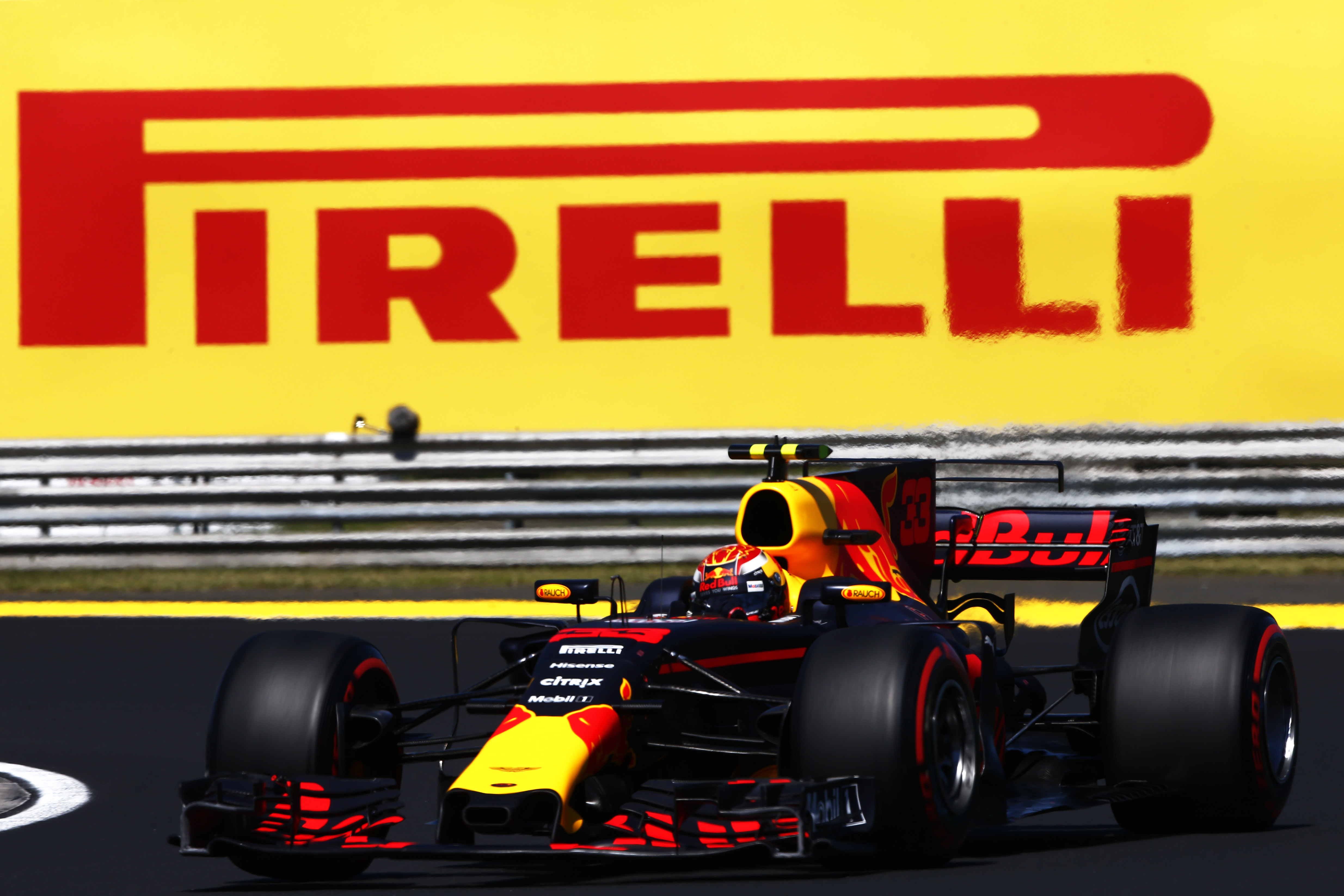
Silverstone in Northamptonshire in England is such an iconic track, the first race in the F1 world Championship history since it begun in 1950. The new cars this year show that copse, maggets and becketts are near enough all flat out now, which make the lap times so quick! Red Bull in their second home race now, following on from Austria, England where the team is based in Milton Keynes. A few new parts have been put onto the RB13, Adrian Newey was seen at the race this weekend. Verstappen did well on Friday, set the 3rd fastest overall, but Ricciardo was just doing his own thing getting the laps done.
Saturday qualifying was far from any of the weather we had on the Friday, it was wet and miserable, and all cars started the session where using the intermediate tyre. They both thrive in the wet, Ricciardo went out to set a lap and managed to go fastest, but the track was getting faster and faster. Ricciardo unfortunately halfway through Q1 stopped, resulting a series of engine penalties, Verstappen starts 5th.
A clean start for the Red Bull boys, Verstappen kept 5th place whilst Ricciardo closed up the field, avoiding the contact earlier on from the Toro Rosso collision. Ricciardo lap by lap moved up the field, eventually finishing an amazing 5th from great pit stop speed and skill from Christian Horner on the pit wall. Verstappen finished 4th, the punctures that Ferrari got did make Red Bull play itself with Verstappen to pit too, rather than risk it for the podium. First time in a while that the team has double points, Verstappen scores points for the first time in a long time.
Driver Points: Verstappen 55 – Ricciardo 117
Hungary, Budapest
Budapest is one of these tracks on the F1 calendar much like Monaco and Singapore is where you need downforce and run high wings. Red Bull as a resultlook strong this weekend, much closer to the front four drivers. Their race pace on the tyreswere close, if not on certain lengths, better than Mercedes. They locked out the 3rd row of the grid, only 9 hundreths behind Hamilton, Ferrari were 0.5 secs ahead of the team.
Lights out on the Sunday in perfect clear skies, Ricciardo got the better start than Verstappen for a change, and they both attacked Mercedes into turn 1, Ricciardo edged Verstappen on the outside into turn 2, drama though as a lock up from Verstappen resulted in the two Bulls hitting each other! Severe damage to Ricciardo’s car unfortunately resulted in an early retirement but Verstappen continued, he received a 10 second penalty as a a result of the contact. Verstappen left it late to pit, was matching the likes of Vettel and Hamilton on their fresh rubber. He pit and then was on fire, closing the two Mercedes, who managed to swap on the last lap, but couldn’t take advantage, so 5th place for him.
Raikonnen finished 2nd, so caught up to Ricciardo, he is now only 1 point behind the Austrailian, Red Bull currently 83 points ahead of nearest team Force India.
Driver Points: Verstappen 65 – Ricciardo 117
Hungaroring, Budapest, Hungary. Sunday 30 July 2017. World Copyright: Andy Hone/LAT Images ref: Digital Image _ONZ0620
Belgium, Spa
The legendary Spa-Francorchamps, the track that most drivers love and feel to be their favourite, from the formidable Eau Rouge, and flat out corners of Pouhon and Blanchimont. Blanchimont is famous for Verstappen’s outside manoeuvre in previous seasons. Red Bull seemed to take a bit more wing of the car than most to balance their less power down the straight, but still manage to produce enough downforce through the middle sector. Verstappen out qualified Ricciardo, both on the 3rd row of the grid, close to beating Raikonnen, missing out by a tenth.
This is the closest Verstappen will get to a home Grand Prix and the crowds were in bright orange, orange for Holland. He started off well, as like Ricciardo both keeping their positions. The Kemmel Straight was were overtaking could of been done via slipstream, Vettel couldn’t get passed Hamilton and no one could pass Red Bull cars. Once more down the Kemmel Straight was when the next action happened, heart break for Verstappen as his car came to a stuttering halt. He was furious, but held it back and waved to the fans saying better luck next time. It did bring out a virtual safety car, and Raikonnen failed to lift which as a result he received a penalty which helped Ricciardo jump him in the pits.
Force India then collided once again, with a full course safety car out with the bodywork scattered across the track. Few laps remained and it went to green, Ricciardo jumped upon Bottas on the safety car restart, much like when he overtook the Williams at Baku. He then pulled away from Bottas, and Raikonnen eventually overtook his fellow Finn. Ricciardo had another podium finish to his name, much happier for the Honey Badger, but once more it was Verstappen left annoyed with mechanical failure.
Driver Points: Verstappen 65 – Ricciardo 132
Italy, Monza
The 13th round of the season is at the temple of speed, Monza. A track which of recent years hasn’t been a happy hunting ground for the Red Bulls in recent years due to their lack of brute power on the straight hurts them. Red Bull as a result increase their rake, and they take more wing off than most which also hampers them around the Lemos and Ascari chicane. Tactically they decided to take penalties here, 45 between the two drivers.
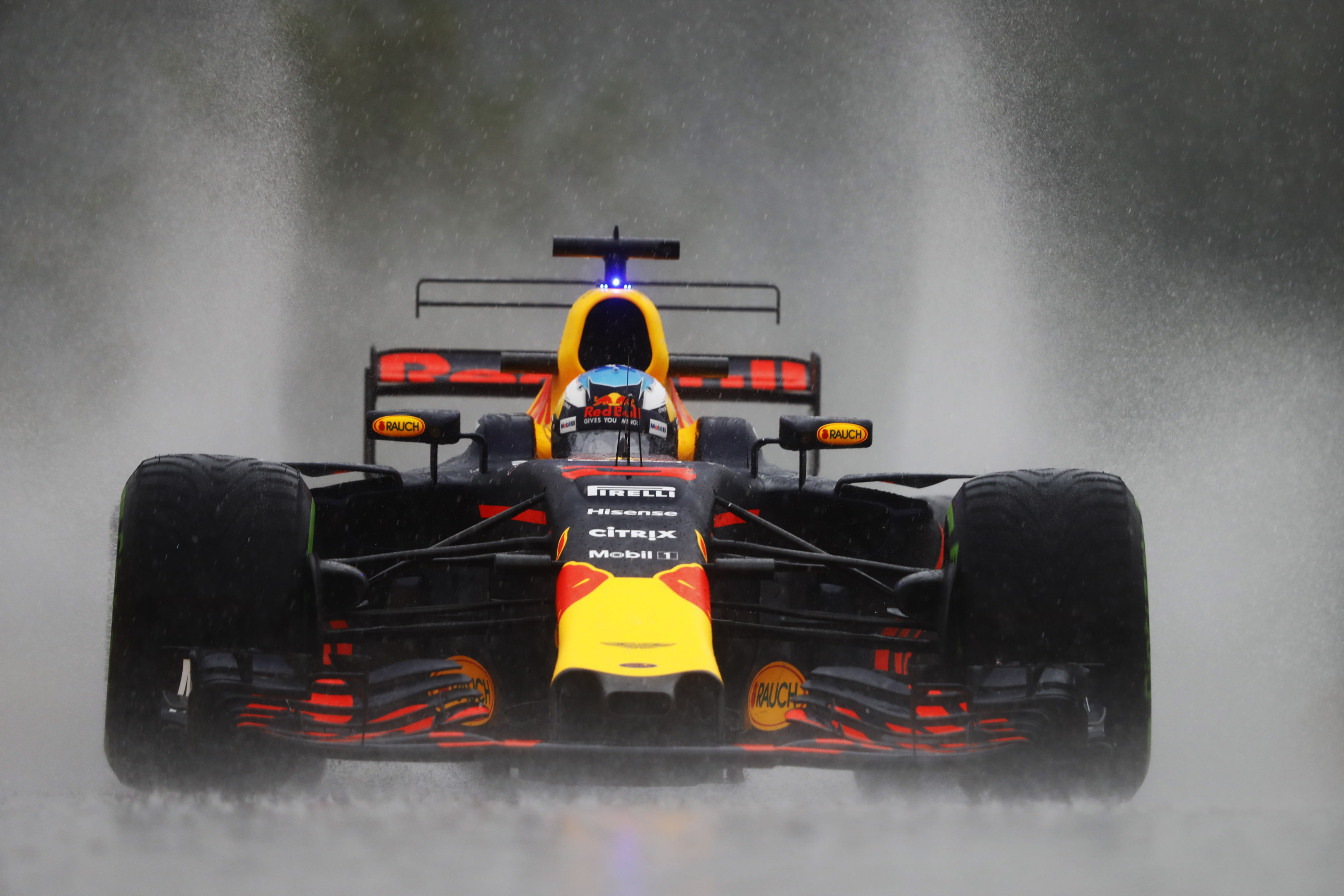
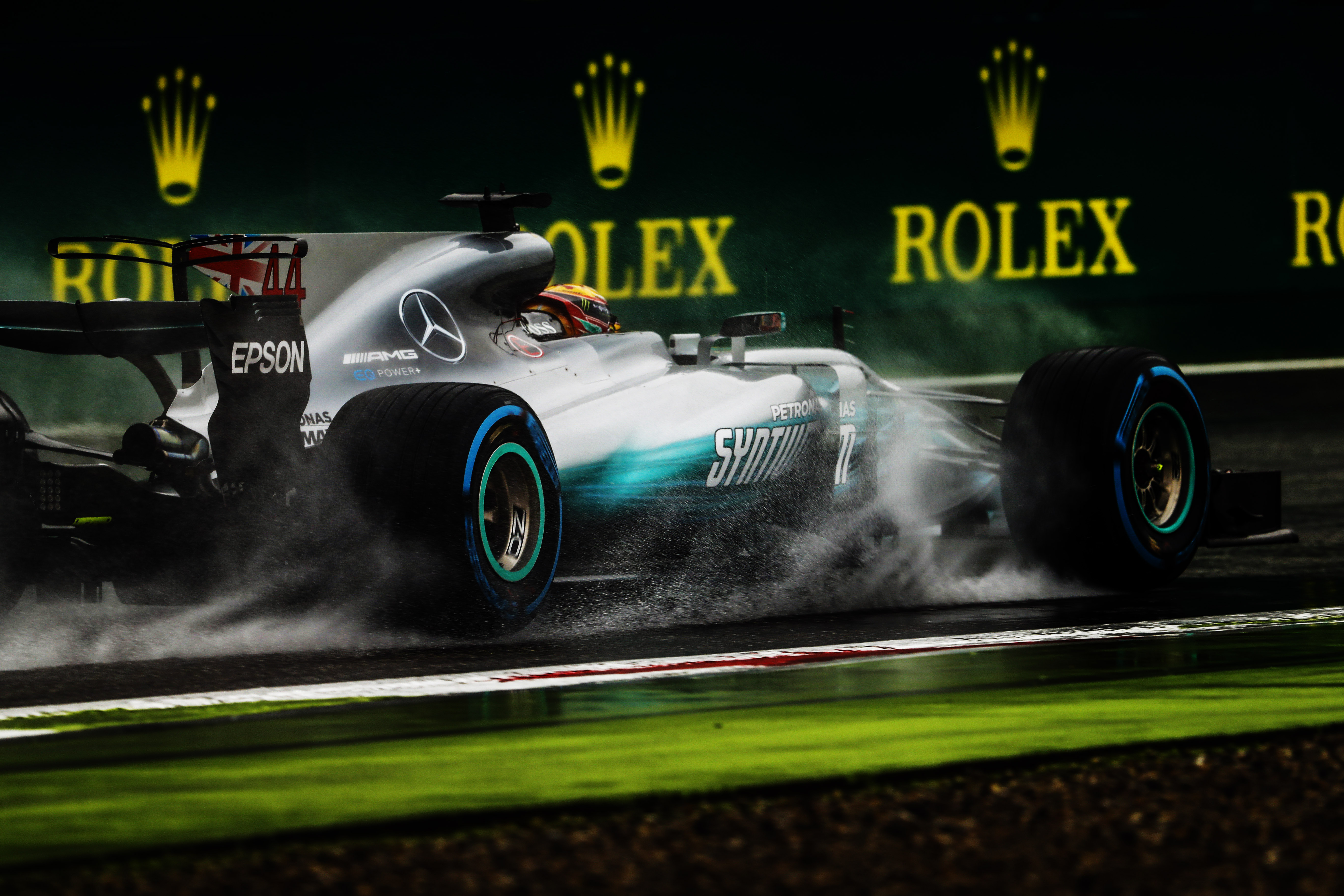
Qualifying was literally torrential downpour, a dry tyre wasn’t seen. Verstappen and Ricciardo were the second and third fastest drivers. They both drive so great in the wet, memories came back to fans of Brazil 2016 and that Verstappen’s Dad put dry tyres on his kart on a soaking wet track and told him to go find the grip.
They love those conditions, through various penalties amongst 9 drivers, they started 12th & 16th. Ricciardo drove amazingly to finish 4th, hunting down Vettel for the podium late on. He started on the slower softs and managed to get up the field, Verstappen dug his own grave, a collision with Massa ended up with him pitting with right front puncture. He managed to get into the points and finish 10th place beating Magnussen who was a bit irate with his overtake on him. Ricciardo gained a further few points on Raikonnen.
Driver Points: Verstappen 66 – Ricciardo 144
Looking Ahead
Bit by bit Red Bull seem to be getting there, all in all, it seems its a case of Deja Vu for the Austrian outfit, close but take any opportunity if the car is reliable enough like Ricciardo in Baku, but unlike Verstappen in Canada. Asia is a much more happy hunting ground than the late European season, with the likes of Singapore and Suzuka on the horizon more dependant on the overall down force of the car. Red Bull seem to be more than secure of their 3rd place spot in the standings, with the drivers far clear of the midfield. Just need to hope their reliability is cured, as Verstappen has failed to finish on various occasions now from brakes through to multiple power unit issues. Newey has helped close the gap, am sure that he is most likely looking at 2018 now, when the halo is introduced and shark/t-wings are banned too to see if he can find something to put them back at the front again.
Red Bull Ring, Spielberg, Austria. Sunday 09 July 2017. World Copyright: Andy Hone/LAT Images ref: Digital Image _ONY3502
As we head into the the latter end of the 2017 season, one by one at Pit Crew we are looking into each individual team with specific weeks. This we look into the Austrian outfit Red Bull Racing. The drivers continued from the 2016 season with Australian Daniel Ricciardo, who always is a joy to watch with deep braking and has a cracking personality. Dutchman ‘Go big or go home’ Max Verstappen also stays, his first full season in the Red Bull after his halfway season swap with Danil Kyvat in 2016 from Toro Rosso. Many think that Red Bull have the best driving partnership on the grid.
Pre-Season
Everyone was optimistic about Red Bull’s chances for the 2017 season. The regulation changes were based on aerodynamics for the season forthcoming and Red Bull always are known for their grear aerodynamics and chassis. It was hoping with that it would outweigh the deficit that the Renault has in terms of horsepower to Ferrari and Mercedes. In the original release of the Red Bull the car looked very basic unlike its rivals, which raised concern. It did have the unique hole in its nose. This did though made the car launch more popular.
In the pre-season tests pace did look promising as day by day additions were coming in from Milton Keynes to adapt onto their RB13. Their car was building well, but again reliability was something that was out of their control. Much like Renault and Toro Rosso their gearbox and engines had problems, so much so they had to revert to 2016 items for the first few races. These were heavier and less powerful which hindered them. The cars still looked very basic compared to the depth of sidepod changes that Ferrari had between 2016 & 2017. They also did not introduce a T-Wing till later in the season. Adrian Newey at this time was away so did not have his full say in the car’s full design.
Australia, Melbourne
This was where we first saw the order of the pack, and it showed that Red Bull were in No Mans Land, as per 2016, it seems Deja Vu for the Austrian team. They were too far behind to challenge Ferrari & Mercedes, but too far ahead to be challenged by Force India & Williams. Their race pace was promising but just lack outright qualifying speed. Ricciardo had a weekend to forget, in Q3 he ended up in the wall after a rare mistake. His car then failed twice on Sunday, on the way to the grid, missing the start, and then towards the end of the first sector halfway through the race on lap 25. Verstappen qualified 5th and then finished 5th. He ended much closer to Raikonnen than people expected. Seemed to set the trend that as per mentioned the race pace of the RB13 is strong but lacks outright speed on Saturday.
Driver Points: Verstappen 10 – Ricciardo 0
China, Shanghai
The Chinese Grand Prix was hindered significantly in its Friday running, when the weather restricted the medical helicopter to fly. Only 20 mins of practice was raced throughout weekend. Reliability gremlins were still in the Red Bull pit area following on from Austrailia but this time it was Verstappen that struggled. He suffered with power deficit and the Shanghai back straight is one of longest of the season, it resulted in him being knocked out in Q1. Ricciardo was best of the rest, qualifying 5th, very much a role reversal from Austrailia.
The weather had a say in the race on Sunday, the majority of the track was dry, but on the main straight and few areas it was still wet from overnight rain. 19/20 drivers started on intermediates. Verstappen due to penalties started 16th, his start was simply amazing! He was up in the top ten crossing the line into lap 2 through passing at the start and midpack collisions. Verstappen was coy and through use of his skill as per seen in Brazil last year and the early safety car he managed to finish an incredible 3rd. Ricciardo was hot on his heels finishing 4th. Great wheel to wheel action but it was kept clean. A much better weekend for the Austrian outfit with a double points finish. Verstappen moved to 3rd in the drivers championship, whilst Ricciardo scored his first points of the season.
Driver Points: Verstappen 25 – Ricciardo 12
Red Bull Ring, Spielberg, Austria. Sunday 09 July 2017. World Copyright: Zak Mauger/LAT Images ref: Digital Image _54I1370
Bahrain, Sakhir
The form of China carried on into the desert of Bahrain. The team looking closer again to the two in front of them. It was just once again, they couldn’t turn their engine up like them. Mercedes had on average a 2 second difference from their Q1 time to Q3 whilst Red Bull only found a second. They were edging closer though, Ricciardo managed to out qualify Raikonnen’s Ferrari. The car was looking better, new additions around the front end of the car was to blame.
They both started well in the Grand Prix, but then on lap 11 after a pit stop for Verstappen trouble happened, heading to the end of sector 1, the second heavy braking area around the track the car didn’t respond to him, it ground to halt in the gravel. He unfortunately retired due to a brake failure. Carlos Sainz and Lance Stroll had an incident as well which brought out the safety car, Ricciardo was caugh among a controversial move by Hamilton. He ended at the end of the period ahead of the British driver. Hamilton turned up the engine and passed him easily along the main straight on the restart. Kimi Raikonnen also passed him later on, as a result he finished 5th. Verstappen due to his non-finish dropped to 5th in the overall standings.
Driver Points: Verstappen 25 – Ricciardo 22
Russia, Sochi
Sochi was moved for the 2017 season, swapping places with Maylasia. This track unlike Bahrain is much more focused on the power of the car rather than outright grip. Williams were much closer to Red Bull as a result, Ricciardo qualified 1.9 seconds behind the eventual pole sitter Sebastien Vettel. Felipe Massa in the Williams managed to split the Red Bull duo, a shade quicker than Verstappen.
The race start was clean, not much contact had occurred on the first lap so far this point of the season, with wider cars, everyone thought that it would be even more collisions. Ricciardo was challenging Raikonnen for 4th, but got caught in, as a result Verstappen got passed the Williams of Massa and Ricciardo into 5th place. The race was very lacklustre after the first lap, there wasn’t any overtakes, except if it does count when Ricciardo’s brake caught alight. It did end up with the Australian failing to finish, back to back brake failures, and their third mechanical retirement of the season. Verstappen finished 5th, a whole minute behind the winner Bottas, a very lonely race for the Dutchman.
Driver Points: Verstappen 35 – Ricciardo 22
Silverstone, Northamptonshire, UK. Friday 14 July 2017. World Copyright: Zak Mauger/LAT Images ref: Digital Image _56I8274
Spain, Barcelona
Much promise was made of Red Bull, with the supposed RB13B being introduced at Spain. As per mentioned with Russia swapping with Maylasia, Spain for the first time wasn’t the first European race of the season. Barcelona tends to be where the first big set of upgrades are brought. After a disapointing beginning of the season albeit podium places here and there they want to be fighting for the championship. They brought updates, the car looking much less basic than it was back in Australia. Renault importantly also did too, if you look back to this article we wrote earlier in the season about their MGU-K. The Red Bull had a new colour scheme in practice, quite a lot of flowviz paint was used.
The car was much more competitive but once more others could turn the wick on their engine up. It was much better though, Verstappen was only 0.6 seconds slower to the 1.2 seconds they were back in Sochi. Ricciardo didn’t have the best of days on the Saturday, a whopping 0.4 behind Verstappen.
Race day was upon us, Red Bull looked good in terms of matching on certain compounds Ferrari and Mercedes, it was all down to the start. The original launch was good for Verstappen, was making the most of the new settings they follow this year, got up alongside Raikonnen into turn 1, but a bang of wheels plush on resulted in terminal damage for both drivers. This resulting in the iconic small video clip of the boy in the stand crying his eyes out. Ricciardo as a result moved up into 4th following, the two Mercedes and Vettel, but this soon became 3rd as a rare failure on the Mercedes happened as Bottas car pulled to the side with engine failure. Ricciardo finished 75 seconds behind the two championship contagnists, being the only 1 besides them not to be lapped. Ricciardo overtook Verstappen in the championship for the first time this season.
Driver Points: Verstappen 35 – Ricciardo 37
Monaco, Monaco
The unique race amongst the principality of Monaco was round 6 in the 2017 Formula 1 World Championship, much like Barcelona a less demanding power track, much hoped Red Bull could be in with the mix for the victory much like last year if it weren’t for the mishap that Ricciardo had in the race. From the offset they looked competitive with Verstappen 3rd quickest on the Thursday, Ricciardo was there abouts, albeit he didn’t get to do a full on lap in practice 3 due to another brake failure on his car so his true pace wasn’t seen until qualifying.
Qualifying did show a shock with Lewis Hamilton being eliminated in Q2, this did give the Bulls an opportunity to qualify higher than they have done this season. Verstappen was the closest Red Bull got to pole all season, the top four being himself, Bottas and the two Ferrari’s only 0.3 seconds between them. Ricciardo made a mistake on his fast lap, but was best of the rest in 5th.
For the first time since China both drivers finished the race, and much like China one of them ended up on the podium. This was once more Ricciardo, himself and Vettel both used the overcut to effect rather than at any other tracks more than likely the undercut being the best option. Monaco always a tough one to pass around, but through the sole pit stop phase Ricciardo went from behind Verstappen, to passing him and Bottas. A late safety car piled the pressure on Ricciardo from Bottas behind but it was a great drive from him once more. Verstappen not best pleased with the team as he missed out on that opportunity. They outscored the Mercedes team with Hamilton finishing 7th.
Driver Points: Verstappen 43 – Ricciardo 52
Canada, Montreal
Montreal is such a stunning track, the flow of the circuit and scenery that is surrounded by makes it one of the best on the calendar. The track does have many memorable moments, much like Ricciardo’s 2014 victory. Montreal is back to Russia, more a power themed track than out right downforce than the previous two races. Red Bull had a few more new developments here, and their race pace was promising compatable with the speeds of Hamilton and Vettel. They got close to Raikonnen in qualifying, but Hamilton and Vettel were in a league of their own on the Saturday.
Verstappen without a doubt thus far has the best start of the season award, starting on the 3rd row in 5th he managed to climb 3 places, going into the second corner in 2nd place just behind the gearbox of Hamilton. Ricciardo also managed to pass Raikonnen, at the end of the first lap, they were 2nd and 5th. Hamilton couldn’t get away but on to the start of lap 11 and Verstappen suffered another engine electrical failure, amazing from the teenager but once more with nothing to show for it. Ricciardo held onto 3rd, Raikonnen was nowhere in the race, whilst Vettel only finished 0.7 behind the Austrailian. A third podium in a row now for the Australian, he was closing in on 4th in the championship and pulling away from Verstappen.
Driver Points: Verstappen 43 – Ricciardo 67
Red Bull are not where they are wanting to be at this current time. Adrian Newey, the greatest designer in the F1 world was appearing more often at the Grand Prix. His project with Aston Martin and the Americas Cup boat championship has been put aside. A few new boosts to power were showing from Renault and Newey began to adapt his thoughts on the RB13. Our second part of the Red Bull 2017 series will follow shortly, from Azerbaijan to Italy. Will Newey and Renault’s input make way for further success for the Red Bull team?
Red Bull currently have four constructors titles and four drivers titles, those four titles are all courtesy of one driver, Sebastian Vettel. The German’s relationship with the team begun in 1998 at the age of 11, when he signed to their junior team. His success in the junior formulae acted as a precursor to his career at the top table as he won the Junior Monaco Kart Cup in 2001.
He then went on to win the 2004 German Formula BMW Championship, with a whopping 18 wins from 20 victories. This opened up his door to F1 as he was rewarded with a test in the Williams FW27. While he was winning these cups in the junior categories, in Formula One another German was taking all the plaudits. As Vettel won 18 from 20 races in 2004, Michael Schumacher was taking his seventh world championship in his most dominant season. He took 13 wins from 18 races and took his final championship win.
Vettel begun testing for the BMW Sauber Formula One team in 2006, while participating in the F3 Euroseries, coming second to Paul Di Resta. 2007 saw him get his big break, while racing in the Formula Renault 3.5 Series. Following Robert Kubica’s horror smash at the 2007 Canadian Grand Prix, Vettel was called up to replace him for the US Grand Prix. He qualified seventh and finished eighth, taking his first point and becoming the youngest point scorer in history, aged 19 years and 349 days.
BMW released Vettel so that he could join the Scuderia Toro Rosso team for the remainder of the 2007 season, replacing Scott Speed. This is where his journey to Red Bull stardom began. Following a few impressive results, his big break came at the Italian Grand Prix in 2008. He qualified on pole in horrendous conditions, becoming the youngest polesitter, which he then masterfully translated into his and Toro Rosso’s first win. He broke Fernando Alonso’s record set at the 2003 Hungarian Grand Prix of youngest winner.
For 2009, Red Bull promoted Vettel to their team alongside Mark Webber, and the rest, as they say, is history. He took Red Bull’s first win at the Chinese Grand Prix, with team mate Mark Webber in second. He took four wins that season and finished second in the championship to Jenson Button in the dominant Brawn.
Credit: Getty Images / Red Bull Content Pool
2010 however, was an interesting year for the team, at the Turkish Grand Prix, while challenging Webber for the lead, the pair collided, putting Vettel out of the race, and the relationship turned sour from that moment on. Both were fighting for the championship come the end of the season, with Lewis Hamilton and Fernando Alonso joining them, in a winner takes all clash at Abu Dhabi. He took pole and won the race, taking his first championship, following in the footsteps of John Surtees in 1964 and James Hunt in 1976 in not leading the championship at any point during the season.
2011 was another story, he was dominant, taking 11 wins from 19 races, showing his driving prowess and the newly found power of Red Bull in Formula One. The Austrian team had beaten the heavyweights of McLaren and Ferrari in becoming the top team in the sport. Vettel was quickly becoming known as one of the best drivers in the sport, taking record after record. 2012 saw him take his third consecutive title, emulating Juan Manuel Fangio and Michael Schumacher in the process.
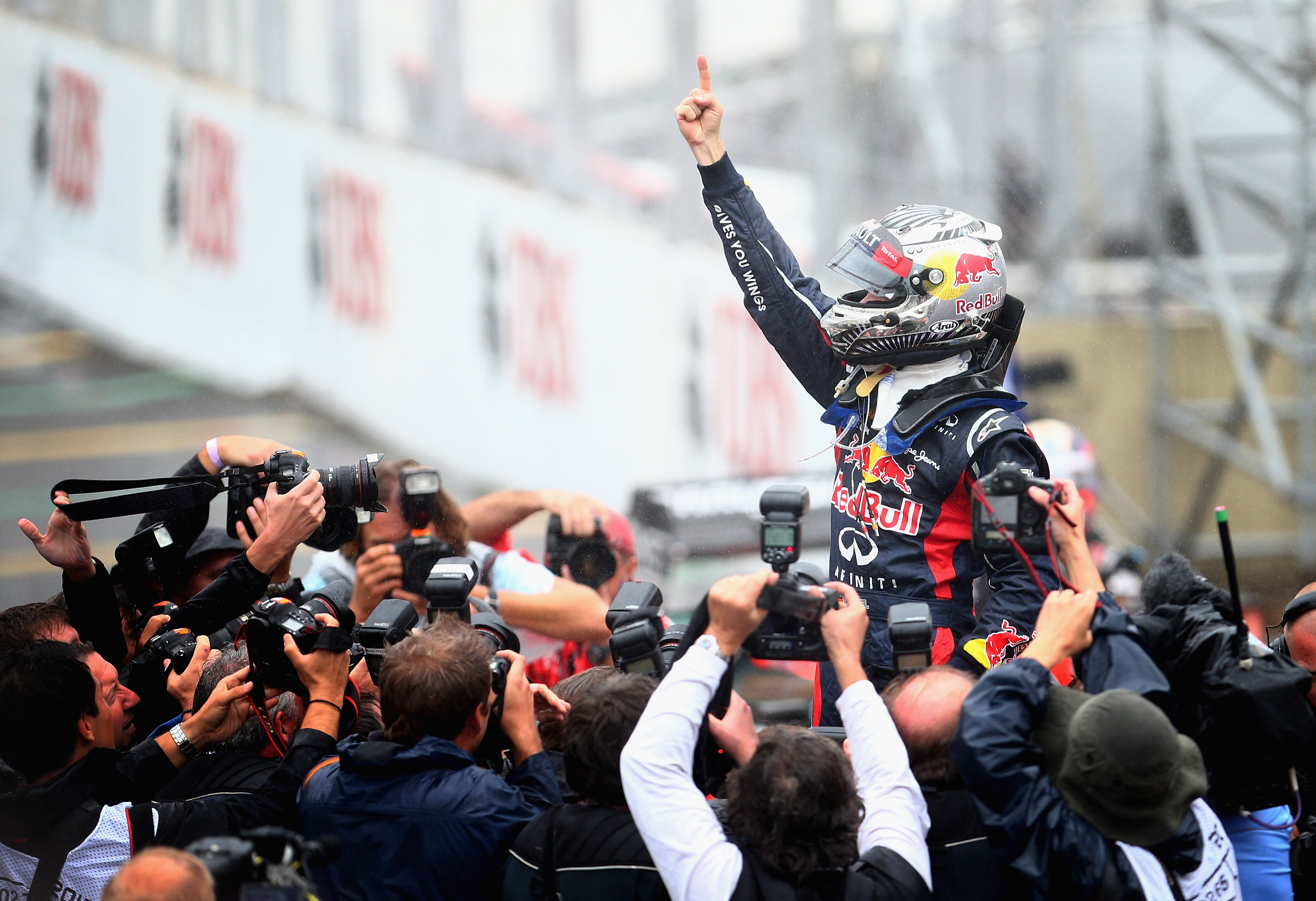
He was in a battle with Fernando Alonso, again, and it went down to the final race in Brazil. After a first lap collision, Vettel was at the back of the grid, he battled back through the grid, taking sixth, while Alonso finished second, meaning there was nothing Alonso could do. A rather symbolic moment from the race however was Mercedes’ Michael Schumacher moving over for Vettel to take sixth place in Schumacher’s final race. It was almost like there was a changing of the guard between the two.
Credit: Getty Images / Red Bull Content Pool
2013 saw Vettel take an impressive fourth title, not without its hairy moments, with the now infamous multi-21 incident in Malaysia. Vettel ignored team orders and overtook Webber, taking the win, the Australian was incandescent. Their relationship was already fragile following the incident in 2010, and this was the final straw, with Webber believing the team was against him, he decided to retire from Formula One at the end of the season.
He was booed at some races and Vettel revealed it did have a negative impact on him, though it was widely condemned by many drivers. It didn’t appear to faze him too much as he ended the season with 13 wins from 19 races, including nine consecutive wins at the end of the season.
2014 was the beginning of the end for Red Bull and Vettel, with the rules being changed, Mercedes became the dominant force, with Vettel being overshadowed by new team mate Daniel Ricciardo. In Japan it was confirmed that Vettel would join Ferrari, ending a 16 year association with Red Bull. A German at Ferrari, sound familiar?
Vettel is currently fighting for the title with Lewis Hamilton, but it’s clear that without Red Bull, Vettel’s career could have been so different.
The year was 2005 and Red Bull Racing were looking to grow their brand in F1 for both the short and long term. As lady luck would have it, such an opportunity presented itself at the end of that season. Scuderia Toro Rosso (STR) was born, and the rest as they say, is history.
The struggling Minardi team was sold to Red Bull owner Dietrich Mateschitz at the end of 2005, when he entered into an equal ownership agreement with F1 legend Gerhard Berger, which lasted until 2008 when the Red Bull team took full ownership.
Credit: Getty Images / Red Bull Content Pool
Designed to serve as a vehicle for the development of their junior drivers before they could be promoted to the RBR senior team, STR has nurtured the talent of the many young drivers, the most notable of which is 4-time champion, Sebastian Vettel.
It was in an STR that Vettel took the first win of his legendary career when he shook up the paddock with a pole to victory drive at the 2008 Italian Grand Prix. He is, to this date, responsible for the only STR win in F1. His victory proved to be the catalyst for his amazing season, which earned him a promotion to the RBR senior team in 2009…. And we all know how that went!
Mateschitz’s vision of creating a sustainable future for his maverick brand in F1, had immediately paid dividends, which has again been repeated by the outstanding talent that is Max Verstappen.
Even though this season has been one to forget for the Dutch driver, his win soon after promotion to RBR again underlined the need for STR in keeping young talent in the paddock, especially given that tenure in F1 is uncertain to say the least. His efforts in the 2015 season resulted in RBR scoring the most points in their history in terms of the constructors rankings.
DRAMA DRAMA
Credit: Getty Images / Red Bull Content Pool
That’s not to say it has been all wine and roses for the team. Early on in their tenure, questions were raised of an unfair advantage that STR had gained as a result of their RBR link. The team had struggled with performance and handling issues, which had been alleviated to an extent during Vettel’s sterling 2008 season.
2016 saw STR find themselves inadvertently in the middle of a motorsport storm, when Daniil Kvyat, then driving for RBR was sent back to STR for further development, and replaced in the senior team by Verstappen, to the chagrin of a large contingent of F1 fans. The malcontent died down however, with Verstappen’s success at RBR.
WHAT CAN WE LEARN
Credit: Getty Images / Red Bull Content Pool
There are lessons to learn in the RBR/STR journey, not the least of which is the value of a team that can act both as a developmental vehicle and retain some independence. STR also doesn’t follow a traditional “use the same engine as the parent team” model which is a departure from the usual in F1. But it is their treatment of younger drivers that stands out.
Teams often face the problem of developmental drivers, who usually run the odd FP1 session or in DTM/GP2, coming into the F1 team with little experience of the rigours associated with full time F1 driving. STR has allowed the younger drivers a way of developing their skills “on the job”, so as to speak, giving them a full shot at the F1 world and arguably a better chance when they are eventually promoted to the RBR team or even join another team on the grid.
Currently Carlos Sainz and Daniil Kyvat helm the machines at STR and while they have struggled a bit this season, the upcoming tracks should suit their style of driving and keep them in the mix for points.
Red Bull started their ever-successful F1 adventure in 2005 with David Coulthard and Christian Klien as its first ever driver pairing, while Vitantonio Liuzzi drove several races in Klien’s place. But what of their predecessors at the Milton Keynes base?
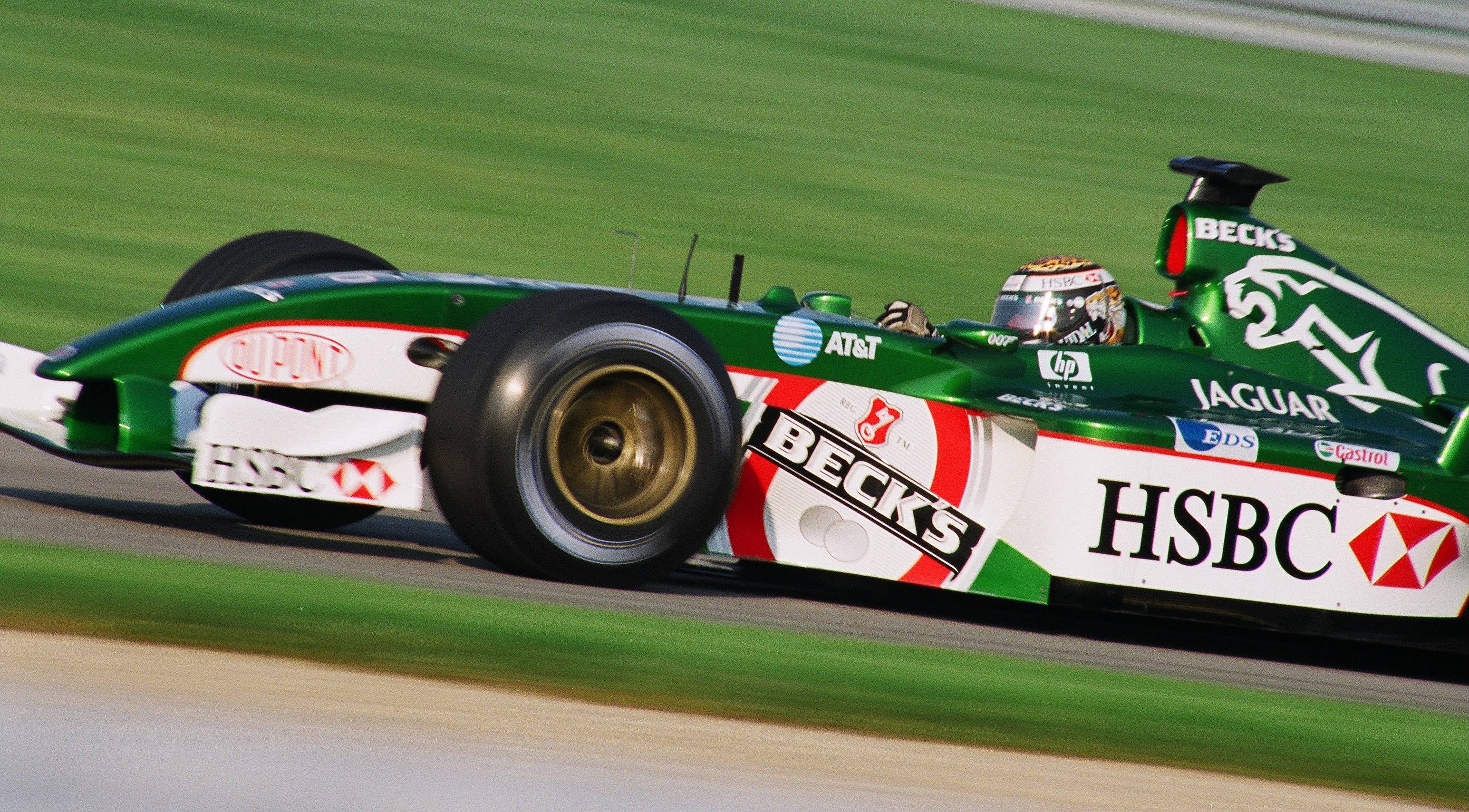
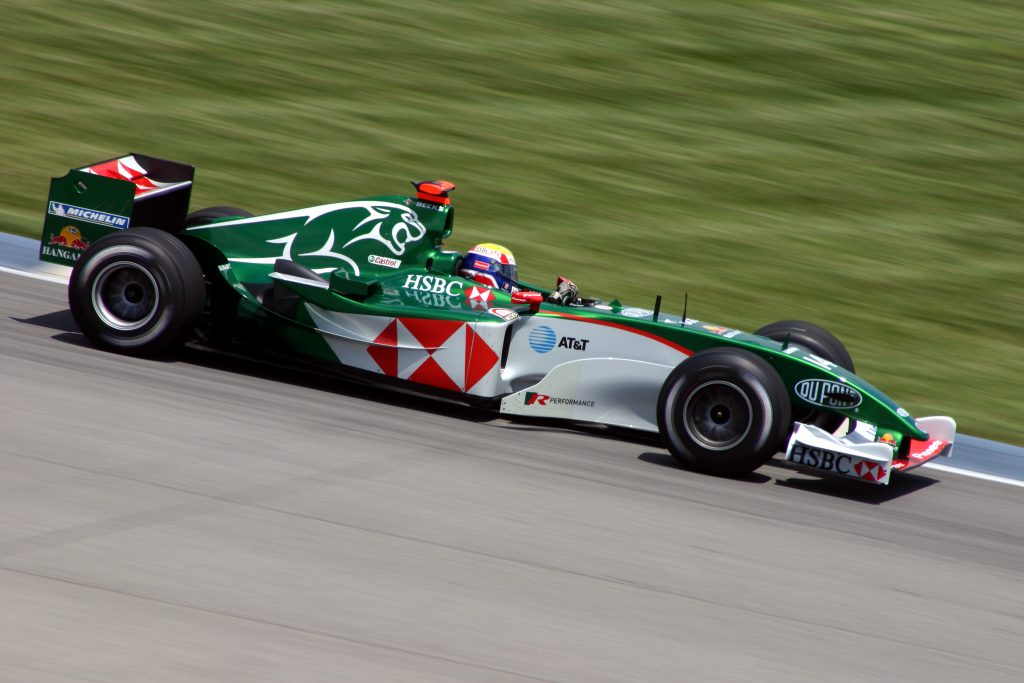
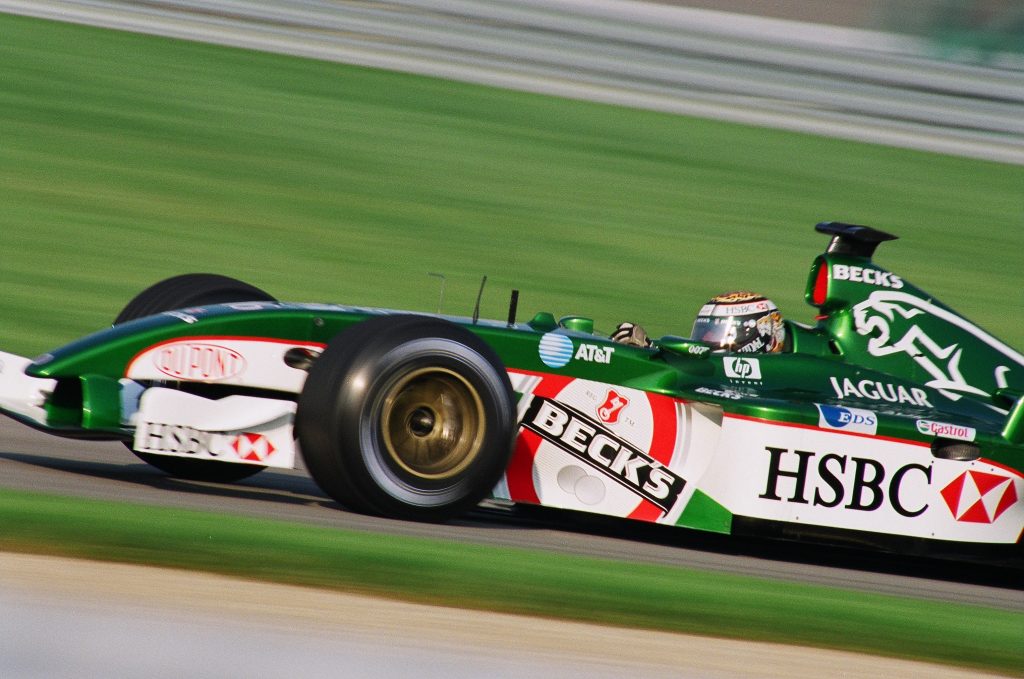
Ford took over the old Stewart team in time for the start of the 2000 season and renamed Sir Jackie’s outfit as Jaguar Racing and promised a lot during their five seasons. In Johnny Herbert and Eddie Irvine, they started out with two Grand Prix winners with Irvine himself fresh from a title challenge with Ferrari in 1999, missing out by two points to Mika Hakkinen.
The season fell way short of their predecessors though. Herbert retired from F1 to go and race in the US off the back of a pointless season, while in a car that clearly struggled Irvine managed to wrestle four points from it. With today’s points system in place, he would have scored 42.
Author: Rick Dikeman
2001 was little better amid turbulence behind the scenes, with successful American team manager drafted in by Ford to turn things around. Irvine was to make the podium in a chaotic Monaco Grand Prix but aside from that results were largely the same. Luciano Burti lasted just four races as Herbert’s replacement before he was himself replaced by Pedro De La Rosa, who would score two points in Italy. Jaguar would finish eighth in the Constructors’ Championship.
2002 saw fewer points but ultimately a higher position in the Constructors’, taking the last of their podium finishes at the Italian Grand Prix courtesy of Irvine once more. Irvine would retire at the end of the season, De La Rosa would go through it pointless and lose his seat as the promising Mark Webber and Brazil’s Antonio Pizzonia joined for 2003. In a similar pattern to Jaguar’s three years, Webber would dominate Pizzonia while he became the second Brazilian to leave Jaguar midway through a season. His replacement, Justin Wilson was on closer terms with Webber and would score a point. Webber would score 16.
A stronger performance in 2003 led many to believe Jaguar would be more regular scorers in 2004, but it didn’t materialise. Webber managed just seven before it was announced he’d be joining BMW Williams, while rookie Klien took just three. Before the end of the season Ford announced their intention to sell, their F1 project floundering.
Author: Rick Dikeman
It wasn’t until very late that Dietrich Mateschitz, whose Red Bull company had sponsored Jaguar as part of the deal to sign Klien, bought the team outright, before buying Minardi a year later and renaming that Scuderia Toro Rosso, Red Bull’s junior team.
Autodromo Nazionale di Monza, Italy. Saturday 02 September 2017. Lewis Hamilton, Mercedes F1 W08 EQ Power+. World Copyright: Glenn Dunbar/LAT Images ref: Digital Image _31I1954
Lewis Hamilton is on cruise control mode, his steering wheel seems to have an extra hidden button, and the British found it and pressed it with his thumb. At the Italian Grand Prix, Hamilton took his 69th pole-position, he is now the driver with the most pole positions in Formula One, he also became the first driver, in 2017, who won two consecutive races and now he is leading the drivers’ championship by three points from Sebastian Vettel.
In Belgium, Lewis looked comfortable and unbeatable, even at the re-start, after the safety car, when Vettel made his move, the Britt managed to defend his first position and a couple of laps later he increased the gap between him and Sebastian Vettel. By seeing the final gap between the two drivers, after 44 laps, someone might assume that Vettel was pushing and was very close to Lewis, but the reality was totally different. The German, was close but still that was not enough for him to make his move and attack for the first place.
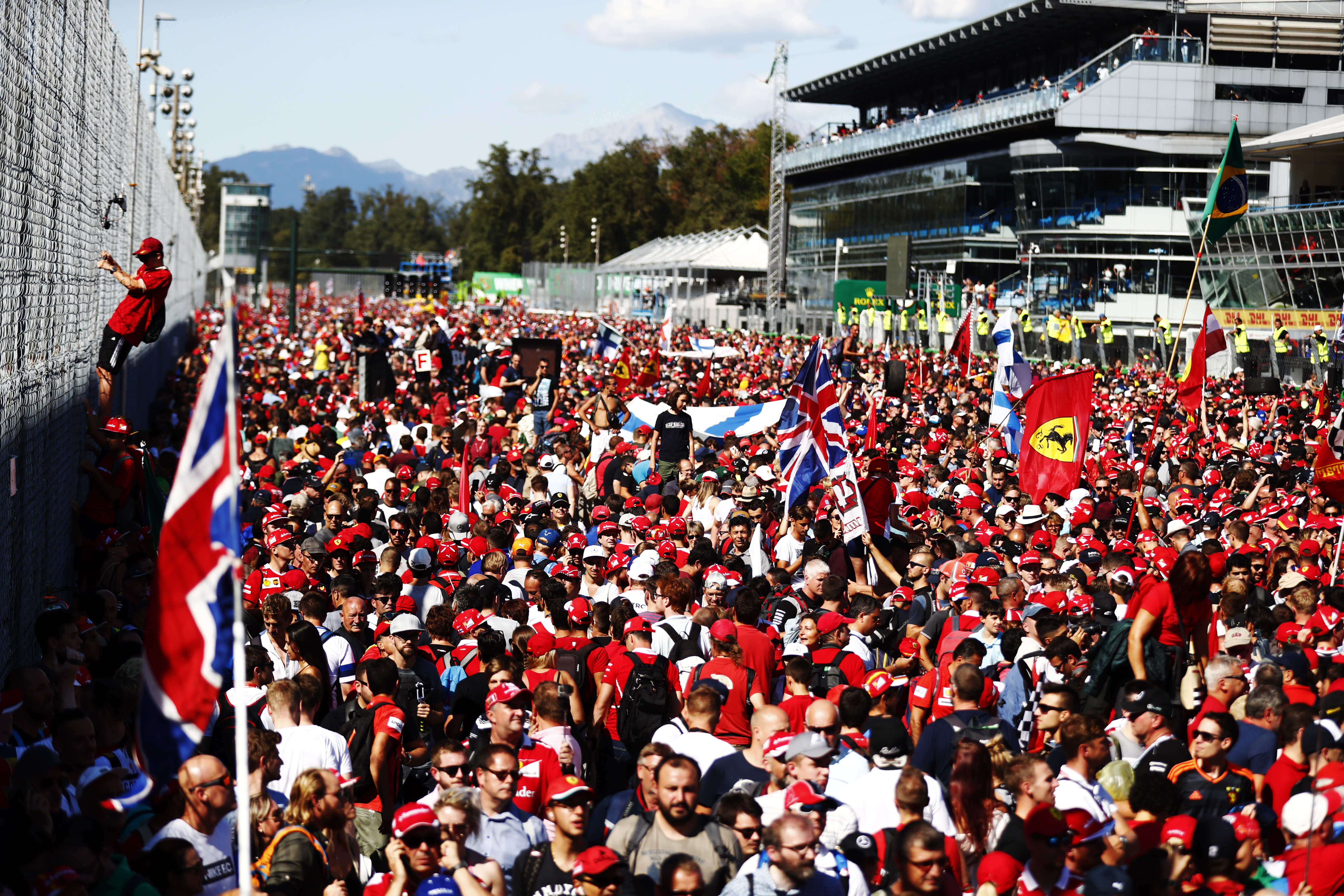
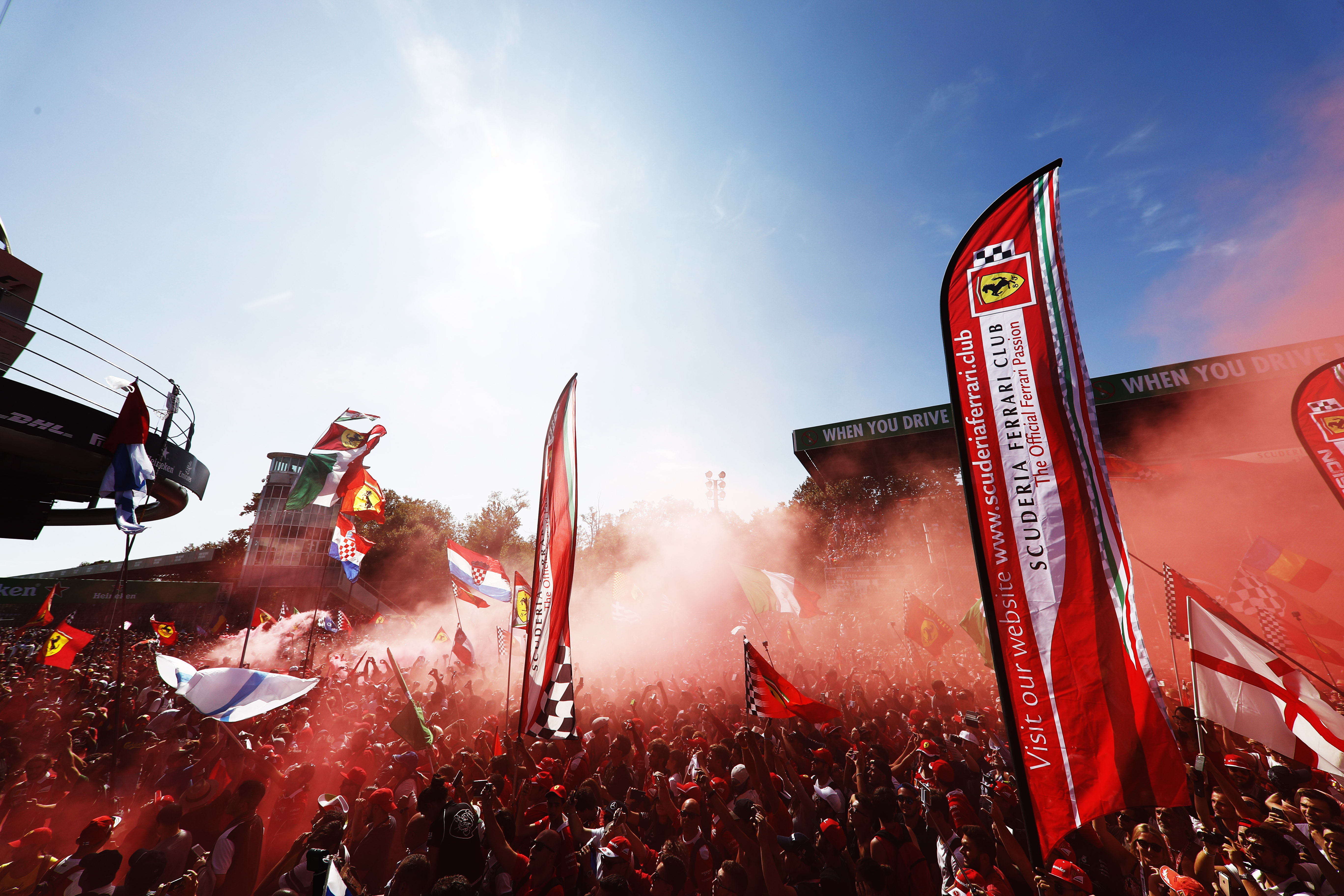
At Monza, the Tifosi were expecting to see a fast and competitive Scuderia Ferrari, but instead of that, Ferrari was not even close to Mercedes. The Silver Arrows, were not stopped by the rain and the hours of delay which took place in the FP3 and during the qualifying session. Lewis Hamilton claimed his 69th pole position, followed by Max Verstappen and Daniel Ricciardo. Lance Stroll and Esteban Ocon qualified fourth and fifth respectively, but after the grid penalties which applied almost to every driver on the grid, Stroll promoted to the second position and became the youngest driver who started from the front row.
The two Ferraris qualified seventh (Kimi Raikkonen) and eighth (Sebastian Vettel), both drivers promoted to fifth and sixth respectively. Max Verstappen dropped down to 13th position, while his team-mate started the race from the 16 position.
Lights out
Autodromo Nazionale di Monza, Italy. Sunday 03 September 2017. World Copyright: Glenn Dunbar/LAT Images ref: Digital Image _31I4027
Lewis Hamilton had a clean start and remained first after lights out, Lance Stroll lost his second position by Esteban Ocon and dropped down to third place. A few laps later Max Verstappen had a collision with Felipe Massa, Max suffered a puncture which cost him time and dropped him at the back of the grid. The stewards decided to take no further action for the incident between the two drivers. Verstappen managed to recover at the end of the race, the Dutch finished 10th ahead of Kevin Magnussen.
Valtteri Bottas, who qualified sixth, had a good start and gained two positions on the first lap of the race. He was behind Hamilton, Ocon and Stroll and it was a matter of time until he was able to attack the two drivers in front of him. The Finn, had a good pace during the race, he completed Mercedes’ 1-2 as he finished second behind his team-mate.
Daniel Ricciardo started the race from the 16th place and finished fourth, a few seconds, behind Sebastian Vettel. The Australian had an amazing race, he passed the slower cars on the first part of the race, while he was on softs. He had the advantage of fresher and faster tyres during the final laps of the Italian Grand Prix. Twelve laps before the chequered flag, the Australian made his move on Kimi Raikkonen, the Finn was unable to defend his fourth position, Daniel took the inside at the first chicane and with an incredible move, he promoted to fourth place. Ricciardo, was gaining on Vettel lap by lap, but he didn’t have enough laps to close the gap with the German, and finished fourth, about four seconds, behind Vettel.
Both McLaren’s drivers watched the end of the race from the garage. Vandoorne and Alonso retired on 33th and 50th lap respectively. Stoffel had electrical issues, whilst Fernando had problems with his McLaren’s clutch.
The next race will take in Singapore, a circuit which suits more to the Ferrari than to Mercedes, Sebastian Vettel is looking to win his fifth race in 2017 and retake the lead in the drivers’ championship. Lewis Hamilton from the other hand, has the momentum. The British driver, looks very strong, he will have to fight hard to keep his lead and his aim will be to expand his winning streak in Singapore.
According to German media, the contract between McLaren and Honda has been terminated. McLaren is set to take the last details of the contract with Renault, while Toro Rosso switched to Honda. Fernando Alonso will stay at McLaren.
For few days now, media stations reported the divorce between McLaren and Honda. Now the very reliable Michael Schmidt from ‘Auto Motor und Sport’ told in his latest video that the ex-dream partnership broke down on Monday.
While the whole world of F1 is waiting daily for an announcement of news in the engine drama, the teams and manufacturers are planing the last details in their contract, for example the drivers and payments.
According to Schmidt McLaren’s plan to “blackmail” the FIA, in terms of leaving Honda and say that they are need a engine in hope to receiving a Ferrari or Mercedes engine, failed. The ruleholders showed the british team the regulation that say, that every team has to tell the FIA his engine partners before the end of may.
The decision of being with Renault next year will be a indicatory for McLaren. CEO Zak Brown told Sky Sports that this will be probably the most important decision for the woking based team ever. Now it seems to be done.
For more information what this deal mean: We already reported a week ago about the scenario:
Alonso will stay at McLaren – First signs on Twitter?
Photo: Steven Tee/McLaren
Also Schmidt is saying, that after that new engine deal is done, two time worldchampion Fernando Alonso will stay at McLaren.
The Spaniard maybe showed the first signs of the lost trust in Honda and the end of the McLaren-Honda era on Twitter.
While he had a picture on his twitter baner, with his first kart that is coloured in the original iconic red-white of the McLaren-Honda alongside the real MP4/4 in his museum, there are now his own Fernando Alonso carts on the baner.
Also he doesn’t following Hondas twitter pages anymore – Ironically the same happened as he leaved Ferrari back in 2014. Back then he unfollowed the twitter page of the italian brand before the whole story got official.